

Fear is the only true enemy, born of ignorance and the parent of anger and hate.
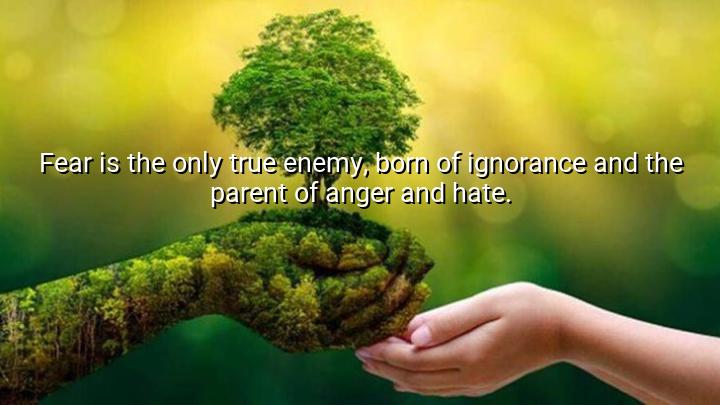




The quote by Edward Albert — "Fear is the only true enemy, born of ignorance and the parent of anger and hate." — suggests that fear is at the root of many negative emotions and destructive behaviors. According to Albert, fear arises from a lack of understanding or ignorance about a situation or the unknown. When we are uncertain or unfamiliar with something, fear often fills the void, and this can escalate into more harmful emotions such as anger and hate, which are often irrational responses to the fear of the unfamiliar.
Albert’s quote emphasizes the power of fear as a driving force behind human conflict. Anger and hate are portrayed as products of fear—emotions that arise when we feel threatened or insecure. These emotions often lead to harmful actions, misunderstandings, and divisiveness. By understanding that fear is at the root of these negative feelings, we can work toward overcoming it through knowledge, awareness, and empathy. This understanding encourages us to address the source of our fear rather than letting it dictate our actions.
The idea that fear is born from ignorance resonates with many philosophical teachings that emphasize the importance of education and understanding in reducing conflict. When we take the time to learn and open ourselves to new experiences, we can dispel many of the fears that arise from the unknown. By increasing our awareness and knowledge, we become better equipped to face challenges without being controlled by fear, and thus prevent it from spiraling into anger or hate.
Ultimately, Albert’s message is a call to confront fear by seeking understanding and embracing compassion. When we do so, we can break the cycle of anger and hate, leading to more peaceful, rational, and harmonious interactions. Through this process, we reclaim control over our emotions and prevent fear from becoming a barrier to personal growth and positive relationships.

VHVan Hieu
Reading this, I reflect on how fear is often misunderstood or overlooked in discussions about anger and hate. Could greater emotional literacy help people identify fear beneath their anger? What strategies can help individuals and communities transform fear into understanding and compassion? This quote encourages deeper exploration of fear’s impact on human psychology and society.
QHMai Quang Hung
The quote underscores fear as a root cause rather than a symptom. It makes me wonder about how fear-based reactions shape public policy and social attitudes. How can leaders and influencers work to reduce fear in societies to prevent hate-driven actions? Also, what role does personal responsibility play in managing fear’s influence on behavior?
BNNguyen Huu Bao Ngoc
Edward Albert’s perspective highlights fear as the ‘true enemy,’ which is a powerful reframe. How might this insight change approaches to conflict resolution or diplomacy? Could focusing on reducing fear lead to more lasting peace? I’d be interested in exploring examples where addressing fear directly helped heal divided communities or nations.
PNThu Phuong Nguyen
This quote invites reflection on fear as both a personal and collective challenge. How do individuals recognize and confront their own fears before they escalate into anger or hatred? Are there psychological or spiritual practices that effectively dismantle fear? It also makes me think about historical events where fear led to widespread social hatred and violence.
BNBao Nhat
I find this statement compelling because it connects fear, ignorance, anger, and hate in a chain reaction. It raises questions about how ignorance fuels fear and whether knowledge alone can dissolve it. How do cultural or systemic factors perpetuate ignorance that leads to fear? I’m curious about the role of media and education in either reinforcing or breaking this cycle.