

Everyone should have a life coach. We learn history, maths, and science at school, but we don't have the tools to understand emotions: to release them and not hold on to anger.
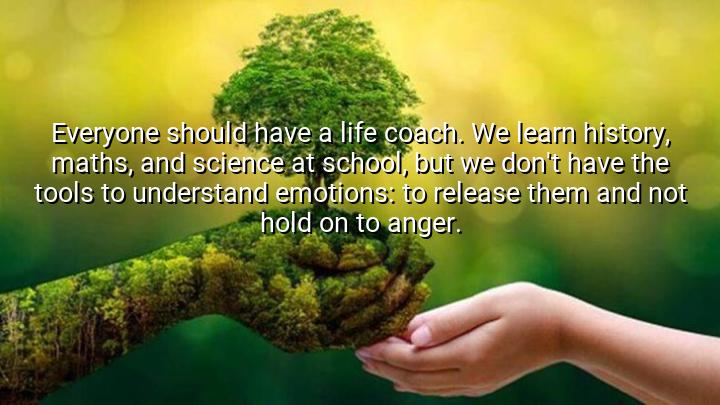




The quote "Everyone should have a life coach. We learn history, maths, and science at school, but we don't have the tools to understand emotions: to release them and not hold on to anger," by Ashley Roberts, emphasizes the importance of emotional education and self-awareness. Roberts, a singer and television personality, suggests that while academic subjects like history, maths, and science are essential, they do not address the emotional intelligence that people need to lead balanced, healthy lives. The quote argues that many individuals are not equipped with the emotional tools necessary to process and manage their feelings effectively.
In this quote, Roberts is advocating for a more holistic approach to personal development, where emotional well-being is given as much attention as intellectual growth. She highlights that while schools focus on developing cognitive skills, they often overlook the teaching of emotional literacy—how to understand, express, and release emotions like anger. Without these skills, individuals may struggle with emotional challenges, leading to stress, unresolved anger, and other negative feelings.
The reference to anger specifically underscores the difficulty many people face in dealing with negative emotions. Roberts suggests that without guidance, people can hold onto anger and let it negatively affect their lives, relationships, and mental health. A life coach, according to Roberts, can help individuals navigate their emotions, teaching them how to release anger and embrace emotional healing, ultimately leading to greater emotional balance and personal fulfillment.
Ultimately, Roberts's quote reflects a belief in the importance of emotional health as part of a well-rounded education. It encourages people to seek help in understanding their emotions and finding healthy ways to cope with them. By promoting the value of life coaching and emotional support, she advocates for a more comprehensive approach to personal growth that includes both intellectual and emotional development.

BLBac Lang
This quote highlights a significant gap in how we prepare people for life. While academic knowledge is essential, emotional understanding is arguably just as important for success and happiness. How do we create environments where emotional education is prioritized? Can life coaching fill that gap, or do we need systemic changes in how schools approach personal development? I’m interested in exploring the best ways to equip people with emotional tools early on.
ATPhuong Anh Trinh
Ashley Roberts’ statement prompts me to ask if emotional intelligence is undervalued in traditional education systems. Would including emotional skills and coping mechanisms alongside subjects like history and math produce more well-rounded individuals? What challenges might schools face in implementing this kind of teaching? It also makes me wonder if life coaching could be democratized and normalized as a preventive mental health practice rather than a luxury.
MPPham Mai Phuong
The idea that we learn facts but not feelings in school really resonates. How might learning to process and release anger from a young age change our emotional landscape as adults? Is it possible that teaching emotional regulation could prevent many mental health issues? Also, how do cultural attitudes toward emotions impact the acceptance of tools like life coaching? It’s a reminder of how emotional education remains an overlooked but vital part of personal development.
NHNguyen Ngoc Huyen
I agree that many people lack tools to handle emotions healthily. But is a life coach the best solution for everyone, or should emotional education be a universal part of schooling? How accessible are life coaches, and would mandating them widen existing inequalities? This quote makes me question how we define education and whether emotional literacy could reduce issues like anger and stress in society overall.
NLTrinh Ha Ngoc Linh
Ashley Roberts brings up a crucial point about emotional education. Why is it that schools prioritize academic subjects but often neglect emotional intelligence? Could integrating life coaching or emotional learning into curricula help students better manage feelings like anger? I wonder if society undervalues emotional skills and if that contributes to many personal and social problems. What would a school system look like that treats emotional well-being as essential as math or science?