

Every time you get angry, you poison your own system.
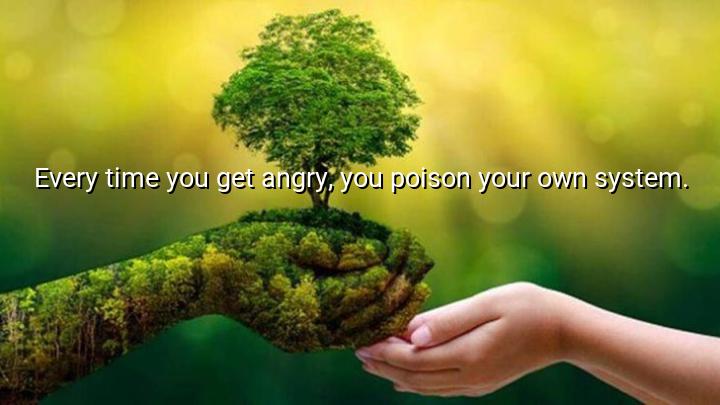




In this quote, Alfred A. Montapert emphasizes the damaging effects that anger has on an individual’s well-being. He compares anger to a poison that harms not just your mental state, but also your physical health. Each time you experience anger, you are essentially harming yourself, as the negative emotional response creates stress and disrupts the body's natural balance.
Montapert’s statement suggests that anger, if left unchecked, can accumulate and lead to long-term physical and emotional consequences. It affects more than just the immediate moment, causing stress hormones to surge, which can negatively impact the heart, immune system, and overall health. The quote serves as a warning about the toxicity of letting anger control your actions, urging individuals to find healthier ways to cope with frustration.
The origin of Montapert’s quote lies in his broader philosophy of living a life guided by peace and self-control. He believed that managing your emotions, particularly negative ones like anger, was essential to achieving inner harmony and living a fulfilling life. His view aligns with many philosophical and psychological teachings that stress the importance of emotional balance for personal health.
Ultimately, Montapert encourages us to recognize the harmful effects of anger and seek ways to let go of it, rather than allowing it to poison our own system. By embracing calmness and composure, we can preserve our mental and physical health, and live with more clarity and peace.

HDHoan Do
I appreciate how this quote warns about the hidden costs of anger. It makes me wonder if society undervalues emotional wellness compared to physical health. How can awareness of anger’s internal effects lead to better preventive care? It also encourages personal responsibility in monitoring and addressing our emotional states for long-term well-being.
LKLum Kpa
This quote makes me consider the psychological aspect of anger as well. Does ‘poisoning your own system’ also refer to mental health consequences like anxiety or depression? How interconnected are our emotional and physical systems? It suggests that anger management is essential not just for relationships but for holistic health.
PNPham Ngan
Reading this, I’m reminded of the phrase ‘holding onto anger is like drinking poison and expecting the other person to die.’ How do we cultivate forgiveness and release anger to heal ourselves? What role do social support and healthy communication play in reducing this ‘poisoning’? It also raises questions about how culture influences our attitudes towards expressing or suppressing anger.
UGUser Google
This idea makes me think about how quickly anger can escalate and affect us internally. If anger poisons the system, does that mean even brief moments of anger can be harmful? How do we balance the inevitability of feeling anger with the need to protect ourselves from its effects? It highlights the importance of emotional regulation as a lifelong practice.
THPHAM THI THU HA
I find this statement compelling because it frames anger as self-destructive. Could this perspective motivate people to seek healthier ways to cope with frustration? How effective are techniques like mindfulness or therapy in ‘detoxifying’ the system from anger? It also makes me curious about the science behind emotional impacts on the body and how much control we really have over this process.