

Draw your pleasure, paint your pleasure, and express your pleasure strongly.
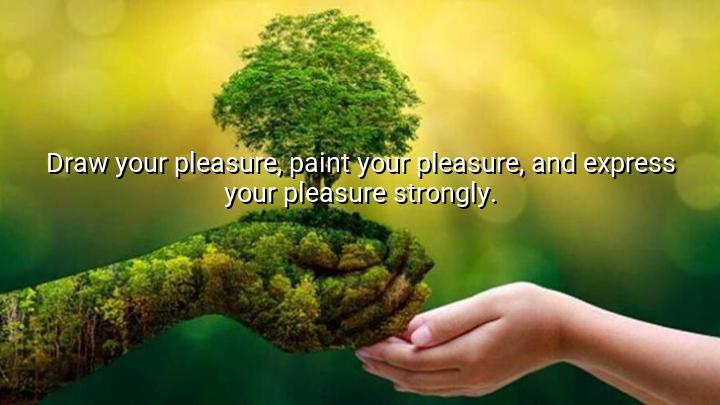




The quote "Draw your pleasure, paint your pleasure, and express your pleasure strongly" by Pierre Bonnard emphasizes the importance of personal joy and emotion in the creative process. Bonnard encourages artists to not only find pleasure in their work but to allow that pleasure to permeate their creative expression. By drawing, painting, and expressing their pleasure with intensity and conviction, the artist’s work becomes a reflection of their inner emotional state, making it more authentic and engaging.
Bonnard, a French post-impressionist painter, was known for his vibrant use of color and intimate depictions of everyday life. This quote reflects his belief that art should be driven by personal satisfaction and that true art emerges when the artist is emotionally engaged in the act of creation. By focusing on pleasure, he suggests that art should be a celebration of joy and beauty, not just a technical or intellectual exercise.
The origin of this quote can be traced to Bonnard’s own approach to art. Throughout his career, he emphasized the emotional connection between the artist and their subject matter. His works often depicted scenes of domestic life, landscapes, and interiors that radiated warmth and intimacy. Bonnard believed that when an artist is deeply connected to their subject, the pleasure they feel while creating becomes the driving force behind the art itself, giving it depth and authenticity.
For artists, this quote encourages them to embrace the joy that comes from creating. It serves as a reminder that art is not only about technical skill or following rules but also about expressing one’s emotions and experiences with authenticity and passion. By focusing on pleasure and allowing it to guide the creative process, artists can produce work that resonates on a deeper, more personal level with both themselves and their audience.

NBNgan Bao
There's something refreshing about this quote—it’s like an invitation to focus on what feels good and then amplify it through art. But I’m curious, what happens when someone can’t access pleasure? Should they wait until they do, or can the process of trying to express joy help them discover it? It’s an interesting tension between creating from emotion and creating toward emotion.
TNPham Thanh Ngoc
This feels like a call to arms for creatives—to unapologetically center joy. But does expressing pleasure require just as much technical skill and emotional intelligence as expressing sorrow or anger? Sometimes, the simplest things are hardest to depict meaningfully. I wonder what techniques or approaches artists use to keep pleasure from becoming shallow or cliché. How can you express joy with nuance and depth?
ISInh Shu
Bonnard’s quote makes me think about how rare it is to truly give ourselves permission to create from a place of joy. Do artists feel pressure to mine emotional turmoil instead of embracing happiness in their work? Is it possible that pleasure-based expression is just as vulnerable and courageous? I’d be interested in exploring how pleasure shows up across different art forms and cultural contexts—can joy be radical?
HNHuy Nguyen
This quote speaks to the idea that art doesn’t always need to be heavy or intellectual—it can simply be a bold expression of what makes us happy. But how do we define 'pleasure' in this context? Is it about beauty, nostalgia, comfort, or even fantasy? I’d love to hear what kind of pleasure Bonnard might have been referring to, and whether it's different from how we understand it today.
TTNgo Tram Truc
I really like the energy in this quote—it’s a celebration of joy and self-expression. But it makes me wonder: in a world that often glorifies struggle and angst in art, is pleasure given the same respect? Do people take joyful art as seriously as art born from pain or protest? I'm curious why pleasure, despite being so universally desired, sometimes feels less ‘profound’ in creative conversations.