

Did I offer peace today? Did I bring a smile to someone's face? Did I say words of healing? Did I let go of my anger and resentment? Did I forgive? Did I love? These are the real questions. I must trust that the little bit of love that I sow now will bear many fruits, here in this world and the life to come.
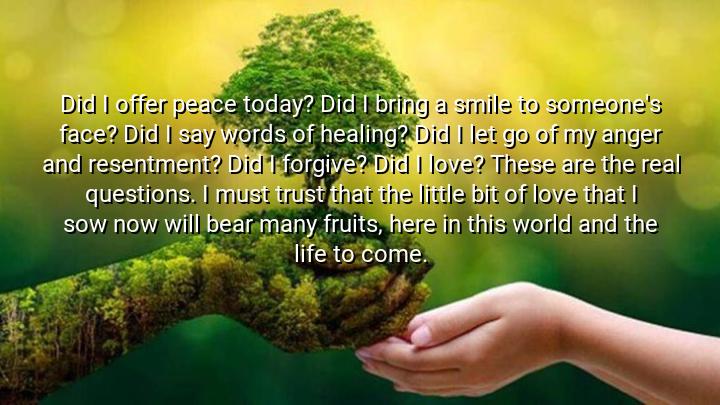




In this quote, Henri Nouwen reflects on the importance of self-reflection and the role of love, peace, and forgiveness in our daily lives. He asks a series of questions to guide his own actions, emphasizing that the true measure of a life well-lived is not in external accomplishments or possessions, but in how we treat others. Questions like "Did I offer peace today?" and "Did I let go of my anger and resentment?" highlight the importance of cultivating positive emotions and actions that can heal relationships and create a more harmonious world.
Nouwen's words suggest that small acts of kindness, such as bringing a smile to someone's face or offering words of healing, have a lasting impact. He emphasizes that these everyday actions, fueled by love and compassion, are what truly matter. By letting go of anger, practicing forgiveness, and expressing love, we sow seeds that can grow into a more peaceful and loving world, both in the present and in the life to come.
The origin of this quote comes from Nouwen's spiritual and philosophical background as a Catholic priest and author. Known for his writings on spirituality, forgiveness, and compassion, Nouwen often explored the intersection of inner peace and external action. His perspective in this quote encourages individuals to prioritize emotional well-being and relational harmony over worldly success, focusing on healing and personal growth.
Ultimately, Nouwen's quote serves as a reminder that the real questions we should ask ourselves are not about material achievements, but about how we treat others and how we cultivate love and peace in our hearts. By trusting that even small acts of love can have profound and lasting effects, we are encouraged to live each day with intention, embracing forgiveness and emotional healing as the true pathways to a meaningful life.

Vvaljean29
The idea of sowing love that bears fruit here and beyond is beautiful and hopeful. But how do we maintain faith in this process when immediate results aren’t visible? Does this require a spiritual perspective, or can it be embraced secularly? I’d like to discuss the patience and trust needed to keep investing in kindness despite challenges.
XTLy xuan thuc
This quote feels like a call to mindfulness and intentional living. How might regularly reflecting on these questions change our priorities and actions? Could this practice help counteract negativity and promote empathy in a world often focused on conflict? I’m interested in hearing how people incorporate such reflective questions into their daily routines.
BNTran Nguyen bao ngoc
Reading this, I’m struck by the focus on letting go of anger and resentment. How do we navigate the complex process of forgiveness when hurt runs deep? Is forgiveness always necessary for personal healing, or are there times when boundaries are more important? This quote invites a nuanced conversation about love, forgiveness, and emotional resilience.
HNHuong Nguyen
This statement emphasizes the power of small actions to create lasting change. I’m curious about the ripple effects of sowing love and forgiveness—how might these actions influence communities or future generations? Does trusting in the ‘life to come’ provide hope and motivation for those facing difficult circumstances? I’d love to explore how spiritual beliefs intersect with everyday kindness.
Ccuongcuto69
I find this quote inspiring because it highlights simple yet profound ways to make a positive impact. But is it realistic to expect ourselves to embody all these virtues every day? How can we be gentle with ourselves when we fall short? It raises important questions about balancing self-compassion with striving for growth and forgiveness.