

Depression, suffering and anger are all part of being human.
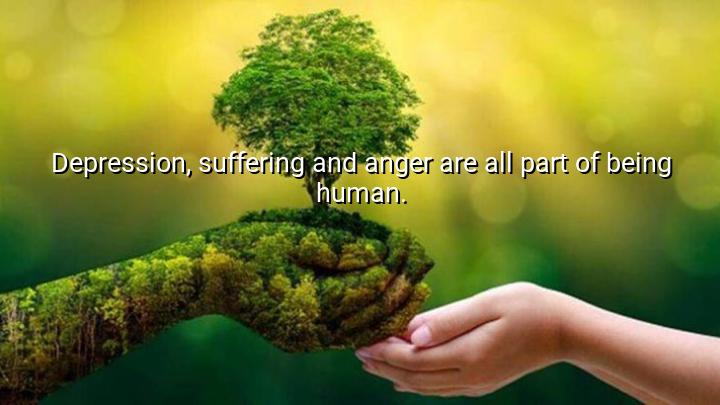




In this quote, Janet Fitch acknowledges that depression, suffering, and anger are inherent aspects of the human experience. She emphasizes that these negative emotions are not exceptions or anomalies, but rather integral parts of what it means to be human. Fitch’s perspective encourages acceptance of these feelings, suggesting that they are natural and unavoidable parts of life, rather than something to be ashamed of or ignored.
Fitch’s statement highlights the universality of emotional struggles, emphasizing that everyone, regardless of their circumstances, will likely face anger, sadness, or discomfort at some point. Rather than seeing these emotions as flaws or signs of weakness, Fitch suggests that they should be understood as normal, even necessary, parts of growth and self-awareness. By accepting these emotions, individuals can better cope with them and find ways to heal.
The origin of this perspective is rooted in Fitch’s experience as a writer who often explores themes of pain, loss, and human vulnerability in her works. Known for her novel White Oleander, Fitch frequently delves into the complexities of human emotions, examining how people navigate their inner struggles and external challenges. Her quote reflects her understanding of the emotional depth that shapes human life and relationships.
Ultimately, Fitch’s quote serves as a reminder that depression, suffering, and anger are not signs of failure, but natural responses to the challenges of life. Embracing these emotions can lead to greater emotional resilience and understanding, helping individuals to process and move through difficult times with greater self-compassion.

NDVien Ngo Dinh
Janet Fitch’s words highlight that negative emotions are part of life’s complexity. How might this understanding change the way we approach education and parenting around emotional health? Could early exposure to this reality foster emotional intelligence and resilience in children? I’d like to discuss the implications of normalizing these feelings in various social contexts.
TTNguyen Tuan Thanh
This quote prompts reflection on how emotional suffering contributes to personal growth. Can depression, suffering, and anger be seen as catalysts for self-awareness and empathy? Or do they risk overwhelming individuals without proper support? I’m curious about the balance between embracing difficult emotions and seeking relief or healing.
NA6a3 Nam An
I appreciate the honesty in this quote, as it validates feelings many try to hide. But how do people move beyond just acknowledging depression and anger to actively coping with them? What strategies or therapies are most effective in helping people manage these aspects of being human? I’d love to hear about approaches that combine acceptance with action.
TLTran Le Thuy Linh
This statement reminds me that pain and anger are universal, not signs of weakness. Does recognizing suffering as part of being human encourage more open conversations about mental health struggles? How can individuals differentiate between normal emotional experiences and conditions that require professional help? I’m interested in learning how cultural perceptions of suffering impact willingness to seek support.
THDo Thi Hue
Janet Fitch’s quote resonates with the reality that difficult emotions like depression and anger are integral to the human experience. How can acknowledging these feelings help reduce stigma around mental health? I wonder what role acceptance plays in healing, and whether embracing our suffering leads to greater resilience. It would be valuable to explore ways society can support people in navigating these challenging emotions without judgment.