

Democracy isn't solely about polite conversations in parliaments. It needs to be continually refreshed with raw passions, anger and ideals.
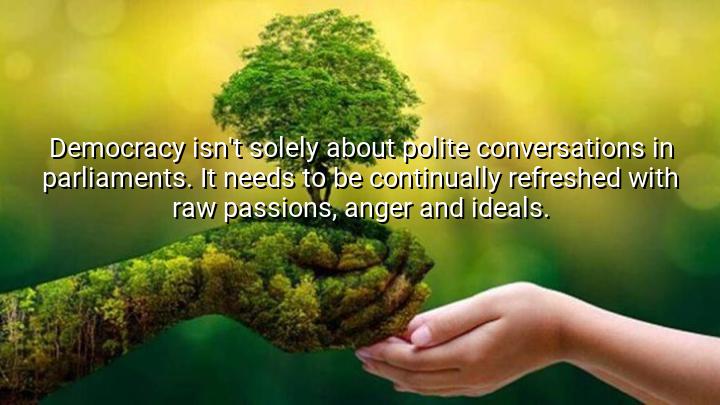




In this quote, Geoff Mulgan argues that democracy should not be limited to formal, polite conversations in legislative bodies like parliaments. While these discussions are important for governance, he emphasizes that a vibrant democracy requires more than just procedural debates and formalities. It needs to be fueled by the raw passions, anger, and ideals of the people, ensuring that it remains dynamic and responsive to the changing needs and emotions of society.
Mulgan's mention of anger and passions suggests that strong emotions are an integral part of the democratic process. Far from being detrimental, these emotions can serve as powerful motivators for change, driving individuals and communities to demand justice, equality, and reform. Democracy, in his view, thrives on the energy and urgency that these emotions bring, challenging the status quo and forcing political systems to evolve and adapt.
By stressing the importance of ideals, Mulgan points to the vision and aspirations that guide democratic movements. These ideals can be the foundation for movements that challenge oppressive systems and push for a more inclusive, just society. Without these guiding passions and principles, democracy risks becoming stagnant or disconnected from the people it is meant to serve.
Ultimately, Mulgan’s quote underscores the idea that democracy is not a static or complacent system; it is a living, evolving force that requires constant engagement from its citizens. Passion, anger, and ideals are not only acceptable within democracy—they are essential to its health and progress. Without them, democracy risks becoming overly bureaucratic, disconnected from the real-world struggles and dreams of its people.

TAPhan thi anh
Geoff Mulgan’s words invite reflection on modern political climates where anger often dominates public discourse. How can leaders and institutions harness this anger and idealism to build consensus rather than division? Exploring successful examples of such leadership might offer hope for more constructive democratic engagement.
NHnguyen Hien
The quote suggests that democracy is a living, dynamic process fueled by emotions. How can citizens be empowered to participate passionately yet respectfully? Does education play a role in teaching people how to engage emotionally without escalating conflict? This could be key to sustaining democratic vitality.
PDTran phuc duy
I’m curious about how democratic institutions can encourage the expression of ideals and anger without descending into chaos. What mechanisms or cultural norms help contain these passions while still allowing them to influence decision-making? It’s a complex challenge that seems vital for healthy governance.
N736. Tran Gia Nhi 7/5
This quote makes me wonder about the role of civil unrest and protests in democratic societies. To what extent are these expressions of raw passion and anger necessary for democracy to evolve? Conversely, when do they become disruptive or counterproductive? Discussing this balance might help clarify how societies can channel emotions constructively.
LLinh
I appreciate the idea that democracy requires more than polite discourse. Could you elaborate on how anger and ideals specifically contribute to refreshing democratic processes? Are there historical examples where passionate public movements revitalized democracy? It would be insightful to understand how emotional energy translates into policy and progress.