

Caregiving requires the intention of love, caretaking requires the intention of fear. Not acting in anger when you are angry requires the intention of love.
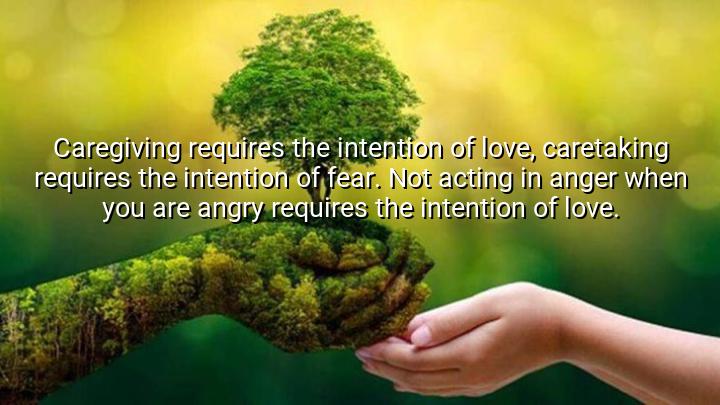




Gary Zukav’s quote contrasts caregiving with caretaking, highlighting the emotional intentions that drive each. He suggests that caregiving is motivated by the intention of love, implying that it comes from a place of genuine concern, compassion, and support for the well-being of others. In contrast, caretaking arises from the intention of fear, suggesting that when caregiving is driven by anxiety, guilt, or a sense of obligation, it can become less about the recipient’s needs and more about the caregiver's own emotional discomfort or need for control.
The quote also speaks to the power of intention in shaping our emotional responses, particularly in situations where we might feel anger. Zukav notes that not acting in anger when you are angry requires the intention of love. This emphasizes that anger is a natural emotion, but how we choose to express it is crucial. Choosing to respond with love, instead of reacting impulsively with anger, requires mindfulness and the intention to act from a place of understanding and compassion, rather than from a place of hurt or frustration.
Zukav’s emphasis on love as an intention aligns with his broader philosophical ideas about spiritual growth and emotional intelligence. He suggests that acting with love, even when faced with difficult emotions like anger, leads to healthier, more productive responses, both for ourselves and those around us. This perspective invites individuals to take a step back in moments of intense emotion and choose a more conscious, loving way to engage with others.
Ultimately, Zukav’s quote offers valuable insight into the role of intention in emotional regulation and relationships. By recognizing that caregiving driven by love fosters positive outcomes, and that responding to anger with the intention of love allows for emotional growth, he encourages a more compassionate and intentional approach to both caring for others and managing personal emotions.

NANg Thi Ngoc Anh
Gary Zukav’s statement suggests that emotional intention is key to authentic connection. How can we become more mindful of whether our actions stem from love or fear? The idea that refraining from anger requires love also points to the importance of inner work and self-awareness. This perspective encourages a thoughtful approach to emotional responses and relationships.
SSon
This quote raises awareness about the motivations behind helping behaviors. Can fear-based caretaking sometimes do more harm than good by creating control or anxiety? How might cultivating love as the core intention transform caregiving experiences for both giver and receiver? I’m curious about practical steps to foster loving intentions in everyday interactions.
TTThao Thao
I find it compelling that Zukav links intention directly to emotional quality. If caregiving requires love, does this mean acts done out of fear lack genuine care? How can recognizing our emotional intentions help us improve relationships? Also, how does the practice of not reacting in anger contribute to deeper love and understanding in difficult situations?
QNQuynh Nhu
Zukav’s insight makes me think about the emotional drivers behind our actions. How do fear and love differently shape our behaviors in relationships or parenting? Is it possible to shift from fear-based caretaking to love-based caregiving intentionally? This quote emphasizes the role of intention in how we respond to others and manage our own emotions.
DHDiu Hoang
This quote highlights the subtle but profound difference between caregiving and caretaking. Could caretaking motivated by fear inadvertently foster dependence or anxiety? How can caregivers ensure their actions come from love rather than fear? The part about choosing love over anger when feeling angry raises important questions about mindfulness and self-control in emotionally charged moments.