

As far as having peace within myself, the one way I can do that is forgiving the people who have done wrong to me. It causes more stress to build up anger. Peace is more productive.
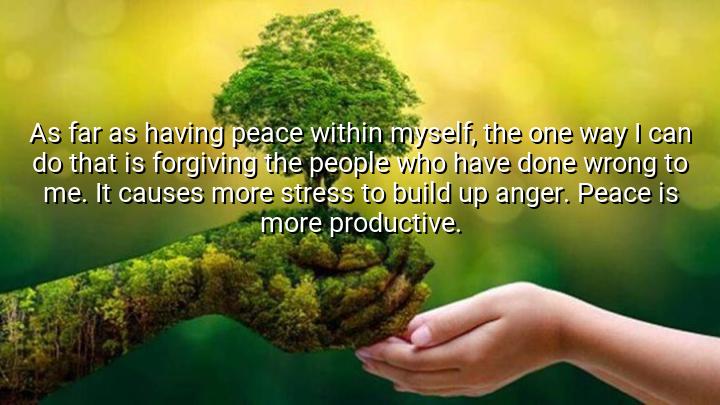




In this quote, Rodney King reflects on the importance of forgiveness as a path to achieving inner peace. He suggests that in order to find peace within himself, he must forgive those who have wronged him, recognizing that holding onto anger only creates more emotional stress. King emphasizes that peace—rather than carrying the burden of unresolved negative emotions—is a more productive and fulfilling way to live, leading to greater emotional stability and personal well-being.
King's statement highlights the psychological and emotional toll that anger can have on an individual. When we cling to anger and resentment, it consumes energy and creates mental tension, making it harder to experience peace or emotional clarity. By choosing forgiveness, we release the hold that negative emotions have over us, allowing room for healing and growth. King’s words suggest that peace is not just a state of mind but a conscious choice that leads to more constructive and positive outcomes in life.
The origin of this quote can be traced to Rodney King's personal experiences, particularly his involvement in the 1991 Los Angeles police brutality incident. After being severely beaten by police officers, King became a symbol for the fight against racial injustice. In the aftermath, King famously called for peace and calm in the midst of the 1992 LA riots, urging people not to resort to anger and violence. This quote reflects his journey of finding peace through forgiveness in the face of profound trauma and injustice.
Ultimately, King’s quote serves as a powerful reminder that forgiveness and peace are essential for emotional healing and personal growth. By choosing to let go of anger, individuals can avoid the stress and harm it causes, and instead focus on creating a life filled with peace and productivity. His message encourages us to seek inner peace, not just for our own well-being, but for the betterment of our relationships and communities.

HBHang Bui
This statement raises the question of what forgiveness truly means—does it require forgetting or reconciliation, or can it simply be a personal decision to release resentment? How might different people interpret or practice forgiveness in varied contexts? It’s a nuanced topic with profound implications for peace and productivity.
TPTrinh Pham
Rodney King’s words remind me of the importance of self-care in the process of forgiveness. Is forgiving others a gift we give ourselves more than the offenders? How do people overcome the barriers to forgiveness, like pride or fear? This quote encourages a compassionate approach to emotional well-being.
AHQuoc anh Ha
Reading this, I’m struck by the idea that peace is ‘more productive.’ Does this mean that forgiveness not only benefits the individual emotionally but also enables better focus and action in life? How might this insight influence conflict resolution or therapy practices? It suggests a practical as well as spiritual value in forgiveness.
PNPham Nhi
This quote highlights how holding onto anger can be mentally exhausting. Does forgiveness serve as a form of emotional liberation, freeing one from stress? I’m curious about the psychological benefits of forgiveness and whether it always leads to peace. Also, how do cultural or personal beliefs shape one’s ability to forgive?
HHNguyen thi hong hanh
I find this perspective inspiring but challenging. Forgiving those who have wronged us sounds ideal, but what about cases where the harm is ongoing or justice hasn’t been served? How does one balance forgiveness with accountability? It raises complex questions about healing, justice, and self-care.