

Art enables us to find ourselves and lose ourselves at the same time.
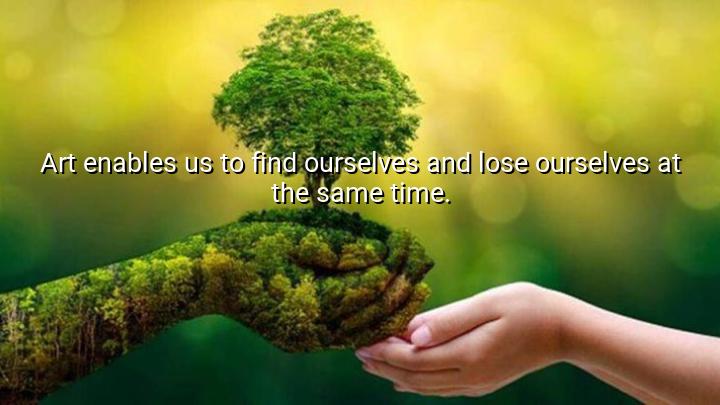




The quote "Art enables us to find ourselves and lose ourselves at the same time" by Thomas Merton reflects the transformative and dual nature of artistic expression. Merton, a Trappist monk, writer, and theologian, suggests that through art, individuals can both discover their true selves and transcend their own identity. The process of engaging with art allows for self-reflection and self-discovery, as it often forces us to confront our emotions, thoughts, and beliefs.
At the same time, Merton emphasizes that art has the power to make us lose ourselves, meaning that it can also offer an escape from the limitations of the self. When immersed in the creative or appreciative process, we can forget our everyday concerns and feel connected to something larger than ourselves. This sense of loss is not negative but instead is a form of liberation, where the artist or viewer becomes absorbed in the work, freeing themselves from personal boundaries and experiencing a deeper sense of connection.
The quote also suggests that art is a dynamic experience—it’s both personal and universal. Through the act of creation or observation, we navigate between the known (ourselves) and the unknown (the vastness of artistic expression), finding balance in this tension. The beauty of art lies in its ability to simultaneously be a mirror of the self and a doorway into another world, giving us both clarity and freedom.
Ultimately, Merton's words invite us to appreciate art not just as a form of expression but as a powerful journey of self-discovery and transcendence. By allowing ourselves to find and lose ourselves in art, we can explore deeper aspects of our identity while also experiencing the liberation that comes from connecting with something beyond the individual.

TTF_gaming
I’ve always believed that art can make you feel more connected to yourself, but this idea of ‘losing’ yourself at the same time is really interesting. Is it possible that by losing yourself in a piece of art, you’re accessing a part of your subconscious or soul that is often hidden from your everyday awareness? Could it be that the feeling of being 'lost' is actually a form of self-discovery?
VNVinh Nguyen
This quote makes me wonder about the therapeutic aspects of art. If art can help us find and lose ourselves at the same time, does that mean it has a sort of healing power? When we’re immersed in art, do we let go of our burdens, and by losing ourselves, are we actually gaining a clearer understanding of who we really are?
XXebec
I love how this quote reflects the dual nature of art. It’s fascinating that art has the ability to ground us in who we are, while also offering us an escape from our everyday lives. But do we always lose ourselves in a positive way? Can art sometimes take us into a place of confusion or disorientation instead of self-discovery?
DTDat Trinh
This quote resonates with me because it highlights the paradox of art – how it can both reveal and conceal aspects of who we are. When we lose ourselves in art, are we becoming more authentic or are we stepping away from reality? How does this process of finding and losing oneself happen simultaneously, and can it ever be truly separated?
CQChi Quynh
I think this quote beautifully captures the transformative power of art. It’s true that when we engage with art, we can discover hidden parts of ourselves, yet, at the same time, it’s easy to feel as though we are lost in the experience itself. But what does it mean to 'lose ourselves' in art? Is it a form of escapism, or is it simply a deeper connection with our true selves?