

Appearance is something absolute, but reality is not that way - everything is interdependent, not absolute. So that view is very helpful to maintain a peace of mind because the main destroyer of a peaceful mind is anger.
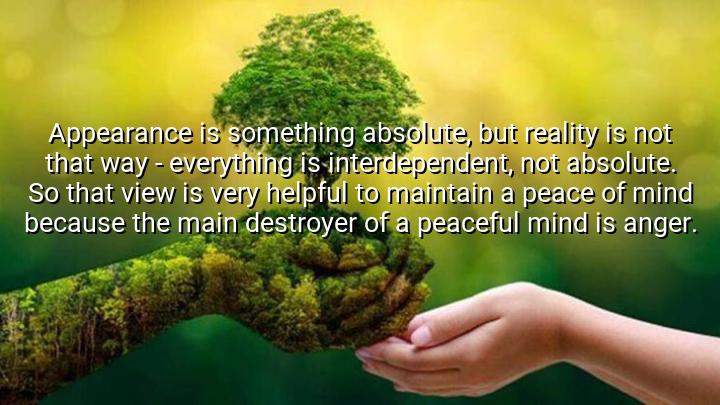




The Dalai Lama's quote emphasizes the difference between appearance and reality, suggesting that while appearance may seem absolute or fixed, the true nature of reality is more complex and interdependent. This perspective invites a more fluid understanding of the world, where nothing exists in isolation, and everything is connected. By recognizing that reality is not as rigid as it may appear, individuals can cultivate a more open and adaptable mindset, which is crucial for maintaining inner peace.
The Dalai Lama highlights that a common disruptor of peace of mind is anger, which often arises from a narrow or absolutist view of the world. When we perceive things as fixed or absolute—whether it’s a person’s behavior, a situation, or even our own emotions—anger can easily emerge from the frustration of feeling powerless or trapped by that perceived reality. The Dalai Lama suggests that by recognizing the interdependence of all things, we can avoid getting stuck in rigid thinking that leads to negative emotions like anger.
The connection between anger and inner peace is central to the Dalai Lama's teachings. He believes that anger is one of the greatest obstacles to peace of mind, as it clouds judgment, creates inner turmoil, and disrupts harmony with others. By embracing the idea that reality is interdependent, we can develop a more compassionate and flexible mindset, which in turn helps reduce feelings of anger and fosters a sense of peace.
Ultimately, the Dalai Lama's quote encourages a shift in perception. Instead of seeing the world as divided into absolute categories, we are invited to understand the interconnected nature of all things. This broader, more inclusive view helps us maintain a sense of peace and balance by diminishing the power of anger, allowing us to approach life's challenges with greater equanimity.

PPPhung Phan
I’m intrigued by the Dalai Lama’s idea that anger destroys peace of mind because it arises from seeing things as absolute. How might this insight change the way we respond to personal slights or social conflicts? Could shifting our view toward interconnectedness transform anger into understanding or acceptance? This quote encourages me to rethink how I interpret challenges and emotions.
NBNgoc Nguyen Bich
This quote highlights the role of perspective in emotional health. How do you think understanding interdependence can help someone struggling with anger? Might it encourage compassion by reminding us that no one exists in isolation? It’s inspiring to see how philosophy and mindfulness can offer practical tools for managing destructive emotions like anger.
KLkhanh linh
Dalai Lama’s reflection invites a deep examination of how our perception shapes our emotions. If appearance feels fixed but reality is fluid and connected, does that mean our anger is often a response to misperception? It’s fascinating to consider whether training ourselves to see beyond surface judgments can lessen emotional turmoil and foster inner peace.
N927. Nguyen Dao Bach Nguyen 9/4
The connection between maintaining peace of mind and recognizing interdependence is profound. Does this suggest that anger stems from a failure to see the bigger picture? How practical is it to apply this view consistently in today’s fast-paced, often divisive world? I’m curious about what practices or habits can help reinforce this mindset and reduce anger’s grip on us.
NMdo ngoc mai
This quote really makes me reflect on how often we mistake appearances for reality and how that can lead to frustration or anger. Could practicing awareness of interdependence help us cultivate patience and empathy? I’d love to hear how people integrate this philosophy into their emotional management, especially when dealing with conflict or misunderstanding in relationships.