

Anger is the most impotent of passions. It effects nothing it goes about, and hurts the one who is possessed by it more than the one against whom it is directed.
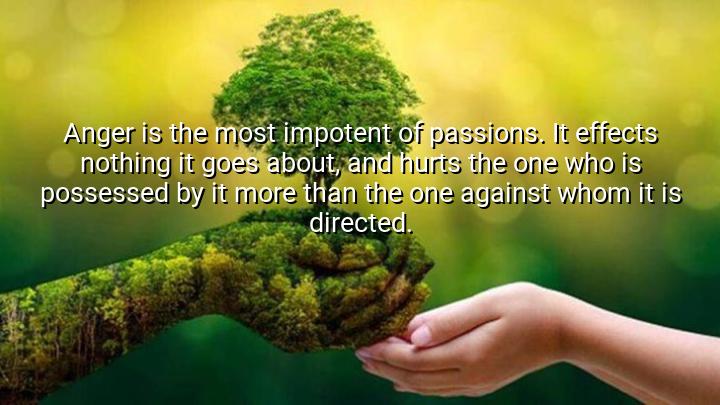




In this quote, Carl Sandburg argues that anger is the most impotent of emotions, meaning it lacks real power or effectiveness in bringing about meaningful change. He suggests that anger does not achieve anything constructive, and instead, it harms the person who harbors it more than the individual it is directed toward. Sandburg emphasizes that anger, rather than affecting others, ultimately damages the person who holds onto it, eroding their emotional well-being and sense of peace.
Sandburg’s view highlights the self-destructive nature of anger, suggesting that it can create internal turmoil without solving the problem that triggered it. The emotion consumes the person’s energy and focus, but its impact is often misplaced or misdirected. Instead of helping to resolve conflict or bring about justice, anger only perpetuates negative emotions and prolongs personal suffering. In this way, Sandburg portrays anger as a counterproductive and ultimately harmful force.
The origin of this perspective can be traced to Sandburg’s life as a poet and journalist, where he often explored themes of social justice, human emotion, and personal growth. Throughout his works, Sandburg reflected on the human experience, examining how emotions like anger could shape lives and societies. His quote reflects a wisdom that recognizes the destructive power of anger and its inability to resolve deeper issues.
Ultimately, Sandburg’s quote serves as a reminder that anger should not be viewed as a force for change. Instead, it should be recognized for its potential to harm the person who holds it, highlighting the importance of emotional restraint and finding healthier ways to address conflict.

QNQuocNguyen Nguyen
Sandburg’s view on anger invites reflection on cultural attitudes toward the emotion. Are there societies or philosophies that treat anger differently, perhaps as a catalyst for change rather than a weakness? How might this quote influence how we teach emotional regulation or address anger in mental health contexts? It’s a rich topic with many layers to unpack.
TNtran thi thanh ngan
This quote provokes me to ask: If anger is impotent and self-harming, why does it feel so consuming and powerful? What psychological or biological factors make anger so hard to control despite its drawbacks? Understanding this might be key to developing better coping strategies or social interventions that help people move beyond destructive anger.
NHNgoc Han
I find it compelling that anger harms the possessor more than its target. How often do people realize this, and what are the implications for conflict resolution? Could this insight encourage individuals to seek healthier ways to express dissatisfaction or injustice? It also makes me think about forgiveness and whether releasing anger can be empowering rather than weakening.
TTLe Dao Thuy Tung
Sandburg suggests anger ‘effects nothing,’ but many argue that anger can provoke critical awareness and mobilize communities. Does this imply that anger alone is insufficient without strategic efforts? How do we balance acknowledging the pain anger represents while also preventing it from becoming a cycle of harm? It raises questions about the role of emotions in social and personal transformation.
DNduc nguyen
This quote resonates with the idea that anger might be self-destructive if not managed properly. How do people distinguish between anger that motivates positive action and anger that simply eats away at their wellbeing? Could mindfulness or emotional intelligence be tools to transform anger from a harmful passion into a productive force? I’m interested in exploring how personal growth intersects with managing strong emotions.