

Anger is so constructive.
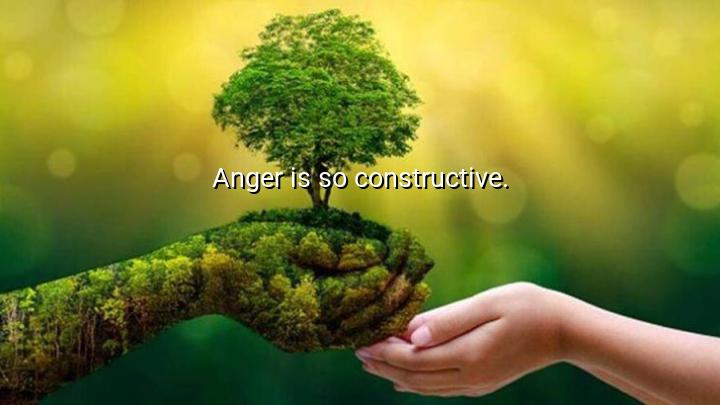




In this quote, John Cameron Mitchell challenges the common view of anger as purely a destructive emotion, suggesting instead that anger can be constructive. Mitchell argues that anger, when channeled effectively, can serve as a powerful force for change and growth. Rather than allowing anger to lead to chaos or harm, it can be directed toward positive outcomes, such as addressing injustices, breaking through creative barriers, or advocating for needed change.
Mitchell’s statement implies that anger has an inherent energy that can drive people to take action. When someone feels angry, it often reflects a sense of frustration or dissatisfaction with a situation, and this emotional response can push them to make meaningful changes or challenge existing systems. In the context of art, anger can fuel creativity, sparking new ideas, and projects that might not emerge without this emotional force.
The origin of this quote can be linked to Mitchell’s background as a filmmaker and performer, known for his bold and provocative work. His film, Hedwig and the Angry Inch, for example, explores themes of identity, rebellion, and emotional expression, demonstrating how anger can be a catalyst for self-discovery and empowerment. In his own life and work, Mitchell has often found that anger can be a tool for personal and artistic transformation.
Ultimately, Mitchell’s quote highlights the potential of anger to drive positive change, creativity, and action. By acknowledging anger as a constructive force, he invites others to reconsider how they view this emotion and how it can be used to fuel both personal growth and social progress. This perspective encourages people to embrace anger as a source of power rather than something to suppress or avoid.

MCPhung Minh Chau
This quote leads me to question how different cultures view anger and its utility. Are there societies where anger is more openly accepted as a tool for change or motivation? How does cultural context shape whether anger is seen as constructive or taboo? Exploring this could broaden our understanding of emotional expression worldwide.
TKtuong khanh
It’s refreshing to see anger framed as something positive. I wonder if this perspective could change how mental health professionals approach anger management. Instead of suppressing anger, could therapy focus on understanding and redirecting it? This approach might help reduce stigma and encourage healthier emotional expression.
Ttrang
The quote makes me reflect on how society often discourages anger, especially in certain groups. Could embracing anger as a constructive force help validate important experiences and empower marginalized voices? I’m curious about the fine line between constructive anger and aggression, and how we teach people to navigate that.
PLPhuong Lan
I’m intrigued by the idea that anger can be constructive. Does this mean anger serves as a signal that something is wrong and needs attention? How might people learn to recognize when their anger is useful and when it’s harmful? This quote opens up a discussion about emotional intelligence and managing intense feelings productively.
PTThi Kieu Phuong Tran
This statement challenges the common perception that anger is purely destructive. How can anger be harnessed constructively in personal growth or social change? Are there specific ways to channel anger so it leads to positive outcomes rather than harm? It would be interesting to explore examples where anger sparked creativity, activism, or important conversations without causing damage.