

Anger is one of the sinews of the soul.
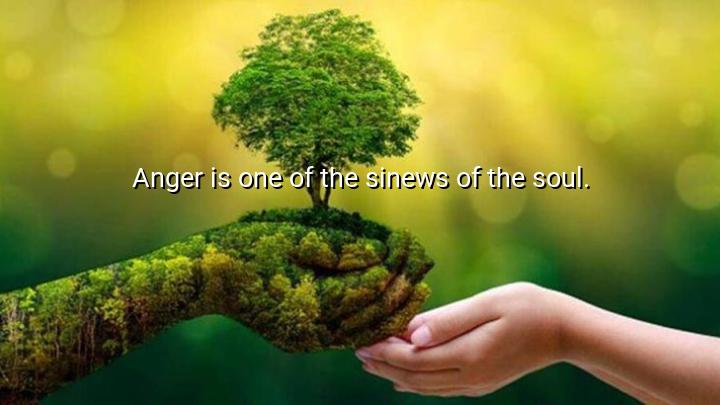




In this quote, Thomas Fuller compares anger to one of the sinews of the soul, suggesting that anger is a vital, underlying force within us, much like the sinews are essential for movement in the body. By describing anger in this way, Fuller implies that anger can serve as a source of strength and energy, driving individuals to take action or stand up for themselves. However, as with sinews in the body, it is something that must be handled with care, as it can both support and strain the emotional well-being.
Fuller’s view on anger challenges the common notion of it being purely a destructive emotion. Instead, he suggests that anger can have a constructive role, as it fuels passion, determination, and resilience. However, just like sinews can become strained or damaged if not managed properly, anger, when left unchecked, can have negative consequences on the individual and their relationships. The quote encourages balance in using anger as a source of energy while being mindful of its potential for harm.
The origin of this perspective can be traced back to Thomas Fuller’s broader philosophical and theological writings. Fuller, a 17th-century scholar and historian, often explored human nature and emotions through a religious and moral lens. His reference to anger as one of the sinews of the soul aligns with the broader 17th-century understanding of human passions and virtues, where emotions were considered integral to one's character and personal growth.
Ultimately, Fuller’s quote serves as a reminder that anger is a powerful and intrinsic part of the human experience, capable of both motivating and driving us, but also requiring careful handling. It highlights the importance of understanding and managing anger so it can be a force for good, rather than a destructive emotion.

DTDuyUyn Than
This metaphor makes me think about how anger connects to passion and purpose. Could anger be a driving force behind creativity or social change? On the flip side, how do we prevent anger from becoming a source of destruction or division? Exploring the dual nature of anger—as both a vital sinew and a potential liability—could offer valuable insights into managing this powerful emotion.
TYDo Thu Yen
I’m curious if viewing anger as a sinew of the soul might encourage people to respect and attend to their anger rather than dismiss it. How does this idea affect the way we approach emotional healing and personal growth? Are there risks in romanticizing anger, or is it mostly empowering? I’m interested in a nuanced discussion about honoring anger’s place within us.
KNNguyen Thi Kim Ngan
The idea that anger is woven into the very fabric of the soul challenges the negative stigma often attached to it. Could it be that anger signals when something deeply important is at stake? How might recognizing anger as essential change the way we handle conflict or injustice in our lives? I’d like to understand how this perspective influences emotional intelligence and self-awareness.
TNtruong nguyen
Describing anger as a sinew implies it connects and supports the soul’s structure. I wonder if suppressing anger might weaken our emotional integrity or authenticity. How can we learn to express anger in ways that preserve our inner strength without harming ourselves or others? It would be interesting to explore therapeutic approaches that help people integrate anger constructively into their sense of self.
NCN.T.K Channel
This quote feels profound because it acknowledges anger as an intrinsic part of the human experience. Could anger be seen as a source of motivation, resilience, or justice? How do various philosophical or spiritual traditions interpret the role of anger in the soul’s development? I’m curious about the balance between acknowledging anger’s power and ensuring it doesn’t consume one’s peace or relationships.