

Anger is not an accepted thing for women. And, you know, I do get angry. I feel it's a very honest emotion.
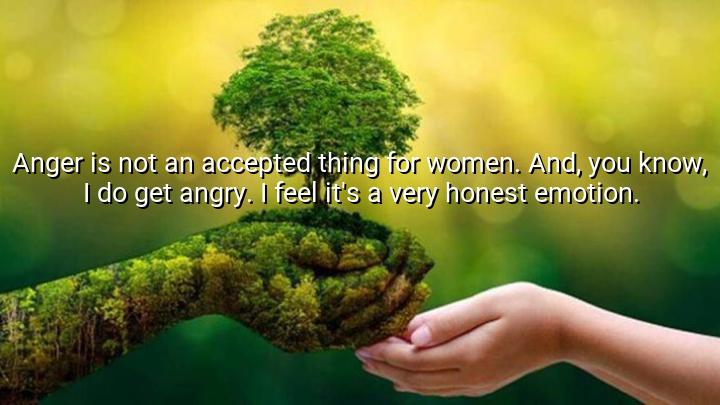




Rosamund Pike’s quote, "Anger is not an accepted thing for women. And, you know, I do get angry. I feel it's a very honest emotion," addresses the societal expectation that women should suppress or hide their anger. Pike acknowledges that anger is often viewed as a negative or inappropriate emotion for women to express. By calling anger a "very honest emotion," she emphasizes its authenticity and the importance of recognizing it, rather than denying or dismissing it.
The origin of this idea lies in longstanding gender norms that dictate how women should behave. Traditionally, women are expected to be nurturing, calm, and composed, with little room for strong emotions like anger. In many cultures, anger in women is perceived as unattractive or disruptive, creating a double standard where men are often allowed to express anger more freely, while women are expected to stay subdued. Pike’s statement challenges this norm by asserting that anger is a natural, valid emotional response that should not be ignored or invalidated.
Pike's belief in the honesty of anger highlights her recognition that emotions like anger are often tied to important personal truths or injustices. Instead of seeing anger as something negative or destructive, she frames it as an honest reflection of reality—something that should be understood and addressed rather than repressed. This perspective aligns with modern feminist views that advocate for women to embrace their full range of emotions, including anger, as a means of self-expression and empowerment.
Ultimately, Pike’s quote calls attention to the harmful societal expectation that women should conceal their anger. By asserting that anger is a honest emotion, she challenges these restrictive norms and encourages women to be more open about their feelings. Her statement invites a reevaluation of how anger is perceived in relation to gender and highlights the importance of emotional authenticity for both women and society as a whole.

CNTran Cam Nhung
Rosamund Pike’s observation resonates with many women’s experiences of emotional policing. How does this repression of anger contribute to societal issues like gender inequality or domestic tension? Could educating people about the normalcy of anger for everyone, regardless of gender, help reduce stigma? I’d like to explore how embracing anger honestly can be a form of strength and self-respect for women.
NQNhu Quynh
Reading this, I’m reminded of how emotional expression is gendered. How does denying women the right to show anger affect their sense of authenticity? Can acknowledging anger as a valid and honest emotion empower women personally and socially? This quote prompts discussion about breaking down gender norms around emotions and creating safer spaces for all feelings.
XCXuan Cuong
This perspective highlights the emotional restrictions women face. Why do you think anger is singled out as unacceptable for women compared to other emotions? Could this be linked to cultural stereotypes about femininity and emotional control? I wonder what strategies women use to navigate this expectation and whether expressing anger honestly leads to better outcomes or backlash.
DNDinh Nguyen
I find this quote really powerful because it calls out the unfair expectations placed on women to suppress genuine emotions like anger. Does this pressure to hide anger contribute to frustration or resentment? How might society benefit from encouraging women to express anger openly and constructively? It also makes me curious about how media portrayals of women’s anger influence public perceptions and self-expression.
TTHuynh Thanh Thao
Rosamund Pike’s statement brings attention to the societal double standards around women expressing anger. Why is anger often deemed unacceptable or unfeminine, while men’s anger is more tolerated? How does this suppression impact women’s mental health and communication? I agree that anger is an honest emotion and wonder how normalizing it for women could change personal relationships and workplace dynamics.