

Anger is an acid that can do more harm to the vessel in which it is stored than to anything on which it is poured.
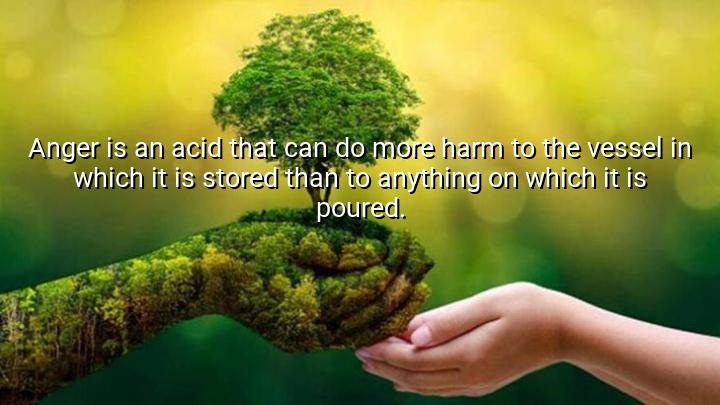




The quote by Mark Twain — "Anger is an acid that can do more harm to the vessel in which it is stored than to anything on which it is poured." — emphasizes the self-destructive nature of anger. Twain compares anger to an acid, a corrosive substance that, if held onto, causes more damage to the person who harbors it than to anyone or anything it is directed towards. Holding onto anger can cause internal stress, resentment, and emotional turmoil, whereas the object of that anger might not be affected as deeply or at all.
Twain's metaphor highlights the importance of releasing anger rather than letting it fester. The longer anger is contained, the more it can erode a person's sense of peace and well-being. Instead of letting anger simmer and cause damage within, Twain suggests that we should find ways to let go of negative emotions before they harm us more than the situation that triggered them.
This idea also reflects Twain’s wit and practical wisdom about human nature. He often pointed out that negative emotions like anger are often misguided and irrational. By holding onto anger, we allow it to control our thoughts and actions, creating unnecessary suffering. In this sense, Twain encourages people to find healthier ways to cope with anger, so it doesn't consume them or damage their mental and emotional health.
Ultimately, Twain’s quote serves as a powerful reminder that anger is not just harmful to the person who is the object of it, but can also be corrosive to the person who holds it. Releasing anger and finding constructive ways to address frustration is key to maintaining emotional well-being and avoiding the internal harm caused by unresolved negative emotions.

NTMai Trang Nguyen Tran
Mark Twain’s analogy is striking in its simplicity and truth. It makes me think about the long-term effects of unresolved anger, such as stress-related illnesses or emotional numbness. How can people cultivate resilience to prevent anger from ‘eating away’ at them? Could practices like journaling or physical activity serve as outlets to protect the ‘vessel’?
ABAnh Bao
Reading this quote, I reflect on how anger, if stored, can corrode relationships and self-esteem. Does the ‘vessel’ refer to the mind, the body, or both? How do we balance acknowledging anger’s legitimacy with preventing it from causing internal harm? It invites a conversation about healthy emotional expression and the risks of bottling up feelings.
NNThao Nhi Nguyen_7a1
The image of anger as acid inside a vessel suggests a containment that can either protect or destroy. How do people learn to safely release anger without spilling it destructively? Are there cultural or individual differences in managing this ‘acid’? I’m curious about the role of mindfulness and therapy in helping individuals process anger before it eats away at them.
MTMy Tr
This quote vividly illustrates the self-destructive nature of anger. I wonder how often people realize that their anger is hurting themselves more than anyone else. How do we teach emotional intelligence to recognize when anger becomes toxic? It also raises the question of how suppressed anger compares to expressed anger in terms of damage to the individual.
LTNguyen Thi Ly Thi
Mark Twain’s metaphor of anger as acid that harms its container more than its target is powerful. It makes me think about how holding onto anger can deteriorate our own well-being. How can we effectively ‘neutralize’ this acid before it causes damage? Is forgiveness the key, or are there other emotional tools that help prevent anger from corroding our mental and physical health?