

Anger is a transient hatred; or at least very like it.
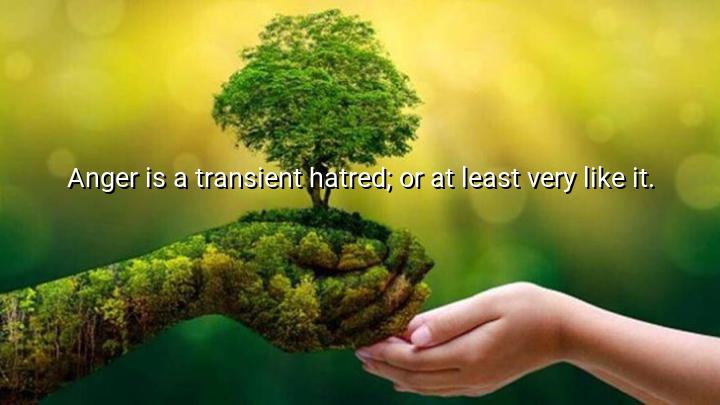




In this quote, Robert South equates anger with hatred, suggesting that anger is a temporary form or expression of hatred. South implies that while anger may not always be as intense or lasting as hatred, it shares a similar emotional foundation. Both emotions stem from a sense of injustice or frustration, and when unresolved, anger can evolve into the more persistent and destructive feeling of hatred.
The comparison highlights the transient nature of anger, indicating that it is a fleeting emotional response, but still powerful. By labeling it as "very like" hatred, South suggests that anger can be just as damaging in the moment, even if it doesn’t last as long. It points to the idea that both emotions can cloud judgment and lead to actions we might later regret, even if anger is often a shorter-lived reaction.
South’s perspective on anger and hatred may stem from his broader religious and philosophical views. As a clergyman and theologian, South believed in the importance of controlling negative emotions and focusing on virtues like patience and forgiveness. His writings often explored human nature and the moral implications of emotions, encouraging self-reflection and restraint.
Ultimately, this quote serves as a reminder that while anger may seem less dangerous than hatred, it can still carry the same destructive potential if left unchecked. Recognizing the similarities between these emotions can help individuals better understand and manage their feelings, avoiding the escalation of anger into deeper, more enduring resentment.

LVDat Le van
The quote makes me think about forgiveness and reconciliation. If anger is a transient form of hatred, does addressing anger early help prevent hatred from taking root? Conversely, can forgiveness of anger help heal wounds before they deepen into hatred? It highlights the importance of emotional awareness and timely communication in relationships.
NQMai Ngoc Quynh
This comparison invites reflection on the social consequences of anger versus hatred. Is society more forgiving of anger because it is transient, or does it cause as much harm as hatred when expressed impulsively? How do cultural attitudes shape how we perceive and react to these emotions? It’s a subtle but important distinction in emotional intelligence.
ANAnh Nguyen
Reading this quote, I’m curious about the psychological and physiological differences between anger and hatred. Are they fundamentally the same emotion expressed at different intensities or durations, or do they have distinct causes and effects? Understanding this might help us better navigate conflicts and emotional responses, knowing when anger is just a momentary flare versus a sign of deeper animosity.
ATLe Anh Tho
I find this idea thought-provoking because it frames anger as a temporary state that borders on hatred. Could this mean that unchecked anger risks becoming deeper resentment or hatred? How can we intervene early to prevent anger from festering into something more damaging? It also raises the question of whether some people experience anger differently, with some feeling it more intensely or for longer durations.
MVngo minh vu
This quote presents an interesting comparison between anger and hatred, suggesting anger might just be a fleeting form of hatred. It makes me wonder how closely related these emotions really are. Does anger always lead to hatred if not addressed, or can it dissipate without escalating? How do the temporary nature of anger and the often more enduring nature of hatred affect how we manage our emotions?