

Anger, if not restrained, is frequently more hurtful to us than the injury that provokes it.
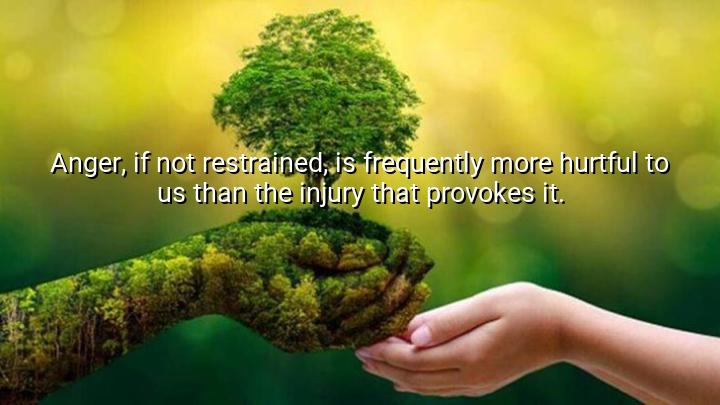




The quote by Lucius Annaeus Seneca — "Anger, if not restrained, is frequently more hurtful to us than the injury that provokes it." — highlights the destructive power of anger when it is left unchecked. Seneca, a Roman Stoic philosopher, emphasizes that anger can cause more harm to the person feeling it than to the individual or situation that triggered it. When we allow anger to control us, it can lead to rash decisions, emotional turmoil, and even damage to our relationships, which ultimately harms us more than the initial offense.
Seneca’s teachings on anger align with Stoic philosophy, which advocates for emotional self-control and rational thinking. The Stoics believed that while we cannot always control external events, we can control our emotional reactions. Anger is seen as a destructive emotion that disturbs our inner peace and judgment. By letting it go unchecked, we risk creating a situation that is more harmful than the one that provoked our response in the first place.
The quote also emphasizes that anger often blinds us to the reality of a situation. When we are overcome by anger, we tend to focus solely on the offense and may overreact, making the situation worse. Instead of resolving the conflict or addressing the issue calmly, we allow our emotions to escalate, which leads to unnecessary suffering for ourselves.
Ultimately, Seneca’s quote serves as a cautionary reminder that anger should be managed and restrained. By practicing self-control and not letting anger dictate our actions, we can avoid making a difficult situation worse and preserve our own well-being and peace of mind.

TNMai Thi Ngoan
Seneca’s perspective emphasizes emotional self-care. It makes me curious about the long-term effects of suppressed versus expressed anger on well-being. Are some forms of restraint healthier than others? How can people learn to identify when anger is becoming more harmful to themselves than the situation that caused it?
LGle giang
This statement challenges the common assumption that anger is primarily damaging to others. Instead, it suggests that the worst harm is often self-inflicted through uncontrolled emotions. How do we reconcile this with the need to stand up against wrongdoing? Is there a way to channel anger constructively without harming ourselves?
TThuTrang23
Seneca’s insight invites us to look inward at the consequences of our emotions. How might this awareness change the way we approach conflict or injustice? Could cultivating patience and reflection reduce the personal toll of anger? It also makes me wonder how therapy and mindfulness can help individuals develop restraint to avoid self-inflicted harm.
LCTran Linh Chi
Reading this makes me consider the balance between expressing anger and restraining it. How do we know when anger is justified and when it becomes harmful to ourselves? I’d be interested in exploring how different cultures teach emotional control and whether some are more effective in preventing anger-related harm.
HDHuy Doan
This quote highlights the self-destructive nature of uncontrolled anger, which feels especially relevant today. I wonder how often people recognize the damage anger does to themselves versus others. Does the awareness of this harm motivate people to seek healthier outlets or forgiveness? It also raises questions about whether anger can ever be fully controlled or just managed.