

Anger has a way of seeping into every other emotion and planting itself in there.
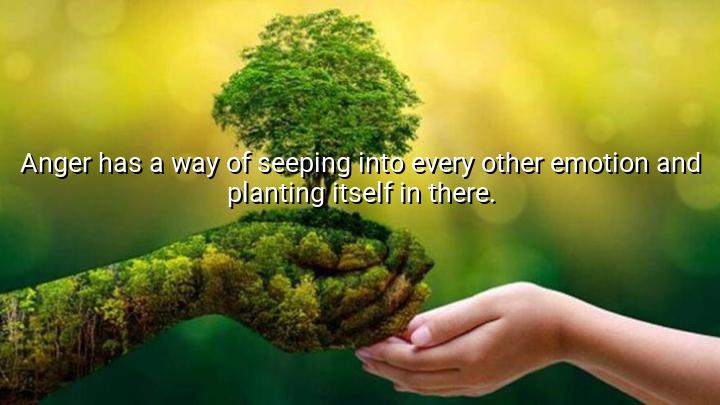




In this quote, Dane Cook describes how anger has a pervasive nature, suggesting that it doesn't remain confined to just one emotion. Instead, anger "seeps" into every other emotion, subtly influencing them and altering their original state. This implies that when a person experiences anger, it can color or distort other feelings, making them more intense or negative than they might otherwise be.
Cook's words point to the contagious and overwhelming nature of anger, which doesn’t just stand alone but intertwines with emotions like sadness, frustration, or even joy. When anger infiltrates these feelings, it can make them feel heavier, more distorted, or harder to manage. For example, a moment of happiness could be overshadowed by the anger lurking in the background, affecting one's overall emotional state.
The quote also highlights the insidious quality of anger—how it doesn’t announce itself overtly but quietly integrates itself into other emotional experiences. This makes it more difficult for someone to separate their anger from other emotions, potentially leading to confusion or more complex emotional reactions. Cook is suggesting that anger doesn’t just pass through—it lingers and alters other emotions.
Ultimately, Cook’s quote serves as a reminder of the complexity of anger and how it can deeply affect an individual’s emotional well-being. By acknowledging its ability to spread into other emotions, Cook encourages awareness of how anger influences our feelings and interactions, highlighting the importance of addressing it before it escalates.

TLNgo Thuy Linh
I’m fascinated by how this quote frames anger almost like a parasite. It makes me think: are there ways to 'detox' our emotional systems so we can feel other emotions more purely? Therapy, journaling, even just honest conversations might help, but it seems like it’s not just about expression—it’s also about identifying where anger is hiding in the first place.
LLLuongThao LuongThao
This quote makes me wonder how much of our daily emotional experience is shaped by unresolved anger from the past. If it’s true that anger seeps into other emotions, could it distort how we interpret everyday situations—like taking offense too quickly or feeling overly defensive? I’m curious whether most people are walking around reacting to things today with anger left over from years ago.
DCPham Duc Cuong
What really gets me here is the idea that anger isn’t always loud or obvious—it can be quiet and hidden within other feelings. Have you ever looked back on a reaction and realized your anger was influencing things in ways you didn’t notice at the time? I think we often dismiss our own anger until it becomes unavoidable. That invisibility is what makes it so powerful—and dangerous.
TMThu M
It’s interesting to think of anger as invasive—like it doesn’t just exist alone but merges into everything else. That makes me wonder: how do we actually prevent it from coloring our joy, our compassion, even our hope? Is the key more emotional awareness, or do we have to deal with the root of the anger before it spreads? This makes me want to reflect on emotional boundaries more deeply.
TNTruc Nguyen
This quote feels so accurate it’s almost unsettling. I've definitely had moments where I thought I was sad or disappointed, only to realize underneath it all, I was actually angry. Do you think anger is a secondary emotion more often than we admit? It seems like it hides behind grief, jealousy, even love sometimes. I wonder how much more clarity we'd gain if we could identify it earlier.