

Anger dwells only in the bosom of fools.
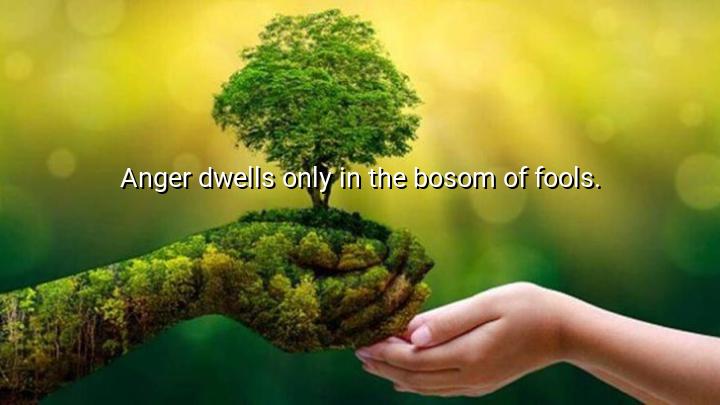




The quote by Albert Einstein — "Anger dwells only in the bosom of fools." — suggests that anger is a destructive emotion that only affects those who lack wisdom or emotional maturity. Einstein implies that anger clouds judgment and prevents rational thought. Only those who allow themselves to be consumed by anger, without considering the consequences or seeking understanding, can be called fools. The quote highlights how anger can undermine a person's intelligence and decision-making abilities.
Einstein’s statement aligns with his broader views on reason and understanding. As a scientist and philosopher, he believed that logical thinking and problem-solving should take precedence over emotional reactions. Anger, according to Einstein, is not a rational response to challenges, but rather an emotional impulse that leads to poor decisions. In his view, the truly wise person remains calm and composed, even in the face of adversity.
The idea that anger resides in the bosom of fools emphasizes the importance of self-control and emotional intelligence. By allowing anger to take over, individuals not only harm themselves but also fail to see the situation clearly. Instead, those who manage their emotions with patience and understanding can navigate difficult circumstances with better clarity and wisdom.
Ultimately, Einstein’s quote serves as a reminder that anger is a sign of emotional weakness and lack of self-awareness. By choosing to respond with reason rather than anger, we preserve our intellect and maintain the ability to make sound decisions. The quote encourages us to rise above anger and avoid being driven by it, instead focusing on rationality and wisdom in our actions.

KANguyen Kieu Anh
This quote feels like a call for self-control but also feels somewhat dismissive of human vulnerability. Does labeling anger as a trait of fools risk stigmatizing natural emotional responses? How can we learn to acknowledge anger without being judged as unwise? I wonder if the key is not the presence of anger but how we handle it that defines wisdom.
GDGold D.dragon
I’m curious about the term 'dwells' here—does it imply that anger must be persistent to indicate foolishness? What if anger is momentary but powerful? Also, is it possible that suppressing anger in the name of wisdom might be unhealthy? I’d like to discuss whether expressing anger responsibly can be compatible with intelligence or if it’s always a sign of foolishness.
THTran Thanh Hung
This quote makes me think about emotional maturity. Does it suggest that wisdom comes from rising above anger, or simply not harboring it? What about situations where anger drives someone to stand up for themselves or others—does that count as folly? I’m interested in how emotional intelligence plays into this idea and whether anger necessarily undermines rational thought.
MTMy Tieu
Reading this, I feel a bit defensive because anger is such a natural and common emotion. If anger only 'dwells' with fools, where does that leave people who feel anger deeply but use it constructively? Could it be that Einstein meant to caution against letting anger control us rather than feeling it at all? How can one distinguish between foolish anger and a reasoned emotional response?
TNLam Tam Nhu
I find this quote intriguing because it frames anger as a mark of a lack of wisdom. But does this mean that wise people never get angry, or that they simply manage their anger better? Also, is it possible that some anger is justified and even necessary for justice? I’m curious how different cultures and philosophies interpret the relationship between anger and intelligence or wisdom.