

Anger can be a problem, but it has tremendous potential, too. It's just figuring out what to do with it.
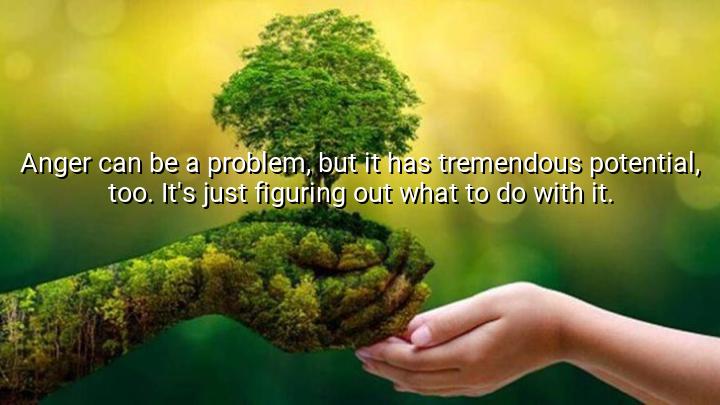




Sean Penn’s quote reflects on the dual nature of anger. He acknowledges that anger can be a significant problem if it is not handled properly, as it has the potential to lead to destructive actions or emotional turmoil. However, Penn also recognizes that anger possesses tremendous potential when it is channeled in a productive or constructive way. The key, as he suggests, is figuring out how to deal with anger effectively and use it for positive outcomes.
The idea that anger has potential speaks to its power as an emotion that can fuel action and drive change. When directed appropriately, anger can inspire individuals to confront injustices, make necessary changes, or stand up for themselves and others. Penn's perspective suggests that anger doesn’t have to be something to suppress or avoid, but rather an emotion that, when harnessed, can lead to personal growth, social change, or creative expression.
However, the quote also implies that managing anger is crucial. If anger is not processed in a healthy way, it can spiral into harmful behaviors or toxic emotions. The challenge, as Penn notes, is knowing what to do with anger once it arises—whether it’s using it as motivation for positive change or learning to release it before it causes harm.
Ultimately, Penn’s quote highlights the complex nature of anger and the importance of emotional intelligence in managing it. Rather than seeing anger as purely negative, he encourages the understanding that it can be a powerful tool for good when properly channeled. The quote reminds us of the transformative potential of anger when it is guided by intention and wisdom.

TMNguyen thi men
This statement encourages a more nuanced view of anger beyond simply labeling it as negative. How might this perspective influence how we teach children or train leaders to handle difficult emotions? Could fostering this understanding reduce stigma around anger and promote healthier communication? Sean Penn’s quote opens the door to rethinking our relationship with anger.
TVThao vy
The idea that the challenge lies in figuring out what to do with anger is profound. How can individuals develop the skills to channel anger productively? Does this require self-awareness, external support, or both? I’m curious about how therapy, meditation, or physical activity might help in transforming anger into positive action.
VTNgoc Vu Thi
Penn’s insight makes me think about how anger can be a catalyst for creativity, justice, or personal transformation. What are some examples where anger led to meaningful change? Conversely, what happens when people don’t know what to do with their anger? This quote highlights the importance of emotional intelligence in managing powerful feelings.
RRuLiシ
I appreciate Sean Penn’s acknowledgment of anger’s potential. It raises questions about societal attitudes towards anger—are we too quick to suppress it? Could embracing anger as a natural emotion lead to healthier emotional expression? I’d like to explore how different cultures or philosophies view anger and its role in personal growth or activism.
VPVi Van Phong
This quote sparks reflection on the dual nature of anger. While it can be problematic, it also serves as a powerful signal that something needs attention. How do we balance acknowledging anger’s value without letting it harm relationships or well-being? Are there specific experiences or training that help people harness anger constructively, especially in high-stress environments?