

Anger and intolerance are the enemies of correct understanding.
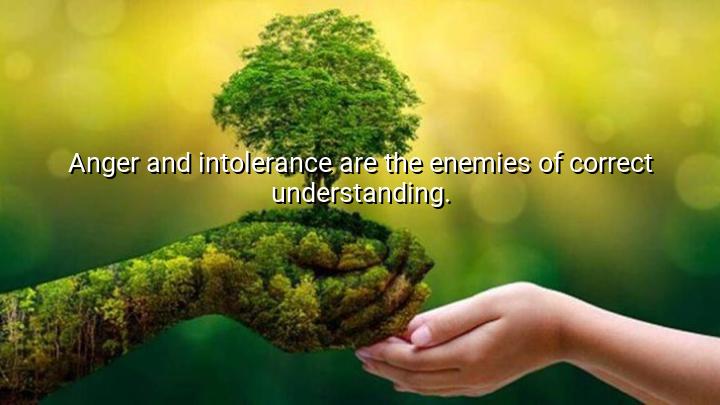




In this quote, Mahatma Gandhi emphasizes that anger and intolerance are obstacles to gaining true understanding. He suggests that when individuals are consumed by anger or unwilling to tolerate different perspectives, they are less likely to approach situations with an open mind. These emotions cloud judgment and prevent people from seeing things clearly, hindering the ability to understand or appreciate other viewpoints.
Gandhi’s words reflect his belief in the importance of peace and compassion in resolving conflicts. He believed that emotional responses like anger and intolerance only serve to deepen divisions and perpetuate misunderstanding. By allowing these negative emotions to take control, individuals shut themselves off from the potential to engage in constructive, empathetic dialogue that can lead to mutual understanding.
The quote also highlights the idea that true understanding requires patience, respect, and a willingness to listen to others, even when their views differ from our own. In contrast, anger often drives people to react impulsively, while intolerance creates an unwillingness to engage with differing opinions. Both of these emotions prevent individuals from reaching a deeper, more informed level of comprehension.
Ultimately, Gandhi’s message encourages people to seek clarity and harmony by letting go of anger and intolerance. Only through a peaceful and open-minded approach can we achieve the true understanding necessary for positive change and unity.

HDKhanh Huyen Dang
Finally, Gandhi’s quote encourages a holistic view of understanding, where intellect and emotion must align. How do we balance standing firm in our beliefs with remaining tolerant of others? This balance seems key to achieving not just knowledge but wisdom in human relationships and societal growth.
BTNguyen Ba Tung
This statement raises questions about cultural differences in expressing anger and tolerance. Are some societies better at managing these emotions in ways that promote understanding? How can we learn from different traditions to cultivate more peaceful interactions? Gandhi’s message seems universally relevant yet applied differently worldwide.
TDPham thuy duong
The quote also makes me think about education and leadership. How can teachers and leaders model tolerance and calm to foster environments of correct understanding? Gandhi’s words imply that emotional intelligence is foundational to effective guidance and social progress. This perspective might inform approaches to conflict resolution.
NUzu nhoa uynn
I’m curious about practical ways to overcome anger and intolerance in discussions. What techniques or mindsets help maintain calm and openness? Gandhi’s wisdom suggests these qualities are essential for dialogue that leads to solutions rather than division. It’s challenging but crucial in both personal and societal contexts.
A9Kim Anh 9/3
This quote invites me to consider how anger and intolerance not only harm others but also limit our own growth. When we’re closed off emotionally, do we miss opportunities to learn and evolve? Gandhi’s insight encourages self-reflection on how managing our emotions can lead to clearer thinking and better relationships.