

An artist is not paid for his labor but for his vision.
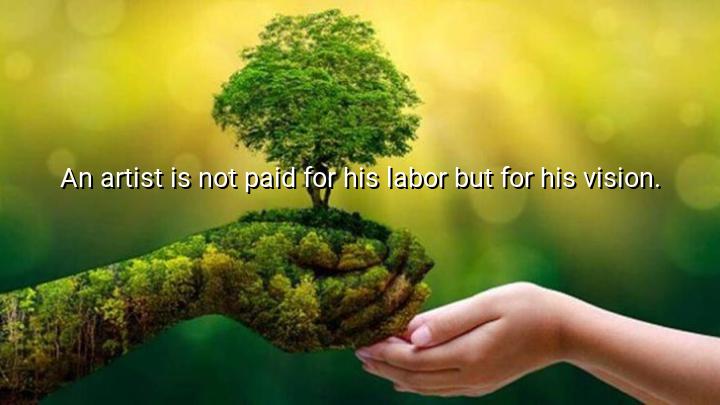




The quote "An artist is not paid for his labor but for his vision" by James Whistler emphasizes the idea that the true value of art lies not in the physical effort or time spent creating it, but in the vision behind it. Whistler, an American-born, British-based artist known for his work in painting and etching, suggests that artists are compensated not for their technical skill or the hours they put into their work, but for their ability to see the world in a unique way and communicate that vision through art.
Whistler’s statement challenges the notion that art is merely a product of physical labor. While artists may spend considerable time honing their craft and executing their work, it is their ability to conceptualize and express ideas in innovative ways that makes their art valuable. The vision of an artist is what makes their work stand out, as it represents a perspective that no one else has captured in the same way.
This perspective also suggests that art is a form of intellectual and emotional expression, rather than just physical work. The artist's vision shapes the meaning and impact of the piece, which is what the audience connects with and finds value in. Art is more than just a visual or aesthetic creation; it is a medium for communicating ideas, emotions, and insights, which makes the vision behind it far more important than the labor involved.
Ultimately, Whistler’s quote highlights the intrinsic value of the artist's vision and the creative process. While the physical effort of creating art is important, it is the unique perspective and conceptual depth that define an artist’s worth and determine the significance of their work. The artist is paid for what they see and how they interpret the world, not just for the labor of bringing that vision to life.

MLNguyen Mi Lan
This quote makes me reflect on how we often equate payment with time spent, but Whistler turns that on its head. If an artist’s labor isn’t the key factor, does that mean some art is undervalued simply because it’s seen as too ‘easy’ or ‘quick’? Could it also mean that we, as consumers of art, need to shift our thinking to focus more on the deeper ideas behind the work, rather than the work itself?
TKNguyen Trung Kien
Whistler’s point really challenges the way we perceive work in the art world. If artists were paid for their vision alone, would we see a shift in how art is priced and perceived? Would this open up the opportunity for more diverse and innovative art to be created? Or would it lead to a situation where the market values only the ‘unique’ and disregards the skilled labor of craftsmanship?
LLlongbao long
It’s interesting to consider how Whistler elevates the idea of vision over labor. Are we, as a society, too focused on the technical aspects of art—whether it’s the hours spent painting or the specific techniques used—when, perhaps, the true value lies in the artist's perspective? If an artist creates something profound in minutes but took years to develop their vision, should they be paid less for the hours spent?
DDDuc Dung
I agree with Whistler’s sentiment to a certain extent. An artist’s vision is unique and powerful, and I think it’s what ultimately connects the work with the audience. But does this idea undermine the effort and hours artists put into their craft? Can an artist’s labor be overlooked just because their vision is extraordinary? It raises a lot of questions about the broader definition of value in the arts.
NDHung Nguyen duy
Whistler's quote really makes me think about the way society values art. It’s fascinating how we often focus on the time and effort artists put into their work, but here he seems to suggest it’s not the labor that’s important—it's the creative vision behind it. Is that why so many artists are underpaid? If the vision is what truly matters, how do we properly value creativity in a world so focused on tangible work?