

Work alone will efface the footsteps of work.
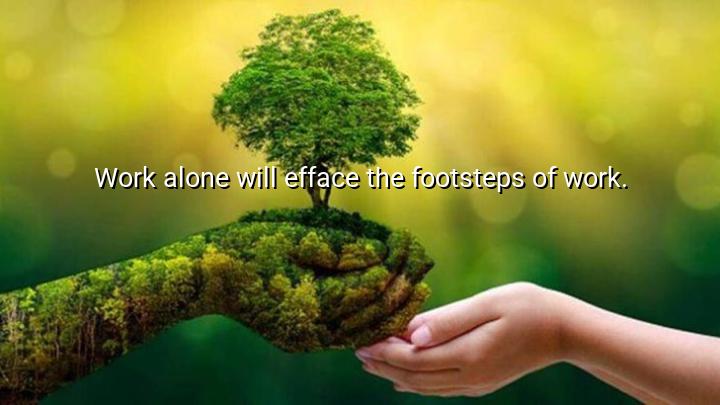




In this quote, James Whistler, an American artist known for his contributions to the world of painting and etching, suggests that work itself is the ultimate way to overcome or erase the impact of previous efforts. He expresses the idea that the results of work, especially in the creative process, are transient. No matter how much effort is put into creating something, time and the process of continuous work will eventually replace or outdo what came before, diminishing its significance.
Whistler’s statement highlights a philosophical view about the nature of art and creativity. He implies that, rather than focusing on the value of past work or the idea of perfection, the artist should focus on progressing and producing new works. The creative process itself is endless, and as one creates more, it effaces the previous steps, pushing the artist forward. In a way, it speaks to the ever-evolving nature of artistic expression.
The origin of this quote lies in Whistler’s own approach to art and his belief in the importance of innovation and growth. As a forward-thinking artist who was part of the Aesthetic Movement, Whistler often prioritized personal expression over traditional expectations and sought to redefine the boundaries of art. His words reflect his philosophy that constant work is key to both artistic development and leaving a lasting impact on the world.
In essence, Whistler’s quote suggests that work itself, through its consistent output and dedication, is what will leave a mark, not the past. The idea is that by focusing on producing more and embracing the process of continuous creativity, one can erase the limitations or footprints of previous efforts, always moving towards new possibilities and innovations.

ATNguyen Le Anh Thu
I’m struck by the poetic nature of this quote and its implications for legacy and memory. Does work inherently erase past work, or is this a metaphor for personal growth and change? How do we reconcile the idea of constant creation with the desire to preserve what we’ve built? It’s a fascinating tension worth unpacking.
NBnhung bui
This quote provokes thoughts about the invisible nature of effort. Sometimes the work behind achievements is hidden or forgotten once new work begins. How do we value the process versus the outcome? Could this idea encourage us to appreciate the ongoing labor behind progress instead of only celebrating final results?
TD06. 7/1. Thuy Dung
I wonder if this statement critiques the endless cycle of work that can erase its own significance. Is it a call to find meaning beyond just activity—to focus on quality, reflection, or impact? How might this idea challenge our approach to balancing work and rest? It opens up an interesting discussion about what it means to truly ‘leave a mark.’
DTNguyen Duy Trieu
This quote feels like a commentary on the ephemeral nature of productivity. Could it be suggesting that work is self-consuming or that progress requires leaving some things behind? How does this perspective influence our understanding of success and fulfillment? I’d love to explore how this idea resonates in modern work culture, where hustle is often glorified.
DPDan phuong
Reading this, I think about how constant work might make individual achievements seem transient. Does this mean that true impact requires more than just effort—it needs recognition or a break in the cycle to appreciate it? I’m curious how this idea relates to creative fields where work is constantly evolving and replacing past creations.