

If you are lonely when you're alone, you are in bad company.
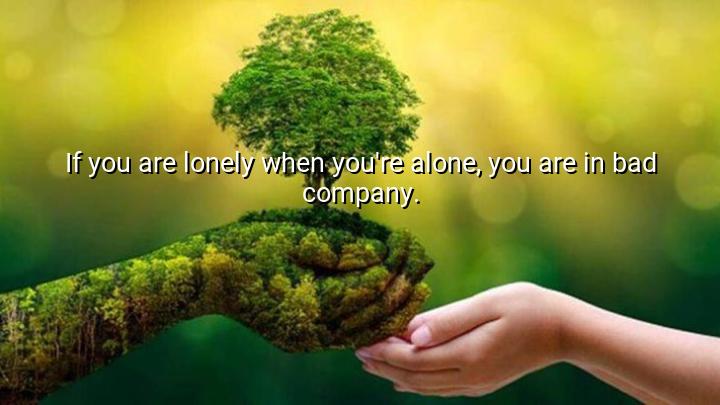




Jean-Paul Sartre’s quote, "If you are lonely when you're alone, you are in bad company," reflects his philosophy of existentialism, which emphasizes the importance of self-awareness and individual responsibility. Sartre suggests that true solitude should not be equated with loneliness. If a person feels lonely while alone, it indicates that they are struggling with their relationship to themselves, implying they are not at peace with their own thoughts and emotions. In essence, if a person cannot be content in their own company, they are not making the most of their time for reflection or self-discovery.
Sartre’s existentialist beliefs stress that we, as individuals, must find meaning and purpose within ourselves rather than relying on external sources for fulfillment. By stating that being lonely in solitude means being in "bad company," Sartre is pointing out that individuals need to confront their own inner struggles and insecurities. It suggests that self-reliance and inner peace are crucial for living a fulfilling life, and the ability to enjoy one's own company is a reflection of one’s mental and emotional health.
The quote also touches on the broader theme of self-acceptance. Sartre implies that true contentment and fulfillment come from a strong sense of self-love and acceptance. A person who is unable to enjoy time alone may be avoiding parts of themselves or may not have developed a healthy relationship with their own identity. In this sense, Sartre is encouraging individuals to embrace their solitude as an opportunity for personal growth and self-exploration.
Ultimately, Sartre’s quote serves as a reminder that being comfortable in one's own presence is essential for mental well-being. It challenges individuals to confront their inner world and find peace within themselves before seeking external sources of happiness or companionship. The quote underscores the importance of self-contentment and the understanding that true fulfillment starts from within.

NTlam nguyen tung
There’s something provocative about this quote that makes me question whether Sartre is being too harsh. Can’t loneliness sometimes just be a temporary emotional state, not a sign of 'bad company'? Is it possible to be a kind, intelligent, loving person and still feel lonely when alone? Maybe the issue isn’t self-company, but societal pressure to always be okay.
NHNam Nguyen Hoang
This quote feels like both a warning and an invitation. It makes me ask—what does it mean to be 'in good company' with yourself? Is it about self-love, self-respect, or something deeper like inner peace? And how do we get there if our default alone time is filled with anxiety or restlessness?
HHiep
Sartre’s words hit hard, especially in an age where constant stimulation and social media have made being alone feel almost unnatural. Have we forgotten how to be with ourselves because we’re always distracted? I wonder if learning to be content in solitude is actually one of the most important emotional skills we can develop today.
KNle kieu khanh nguyen
It’s a powerful and slightly unsettling thought. Are we expected to enjoy our own company at all times? Some people thrive in solitude, while others genuinely need social energy to feel whole. Does this quote unfairly pathologize loneliness? Or is it pushing us to cultivate a more mindful and self-aware relationship with ourselves?
TNThu Nga
This quote really challenges the way we think about solitude. It makes me wonder—does true contentment come from being at peace with yourself? If so, why do so many people struggle with being alone? Is loneliness always a sign of inner unrest, or can it just reflect a natural human need for connection? I’d love to know how Sartre balanced his own solitude with relationships.