

An angry man is again angry with himself when he returns to reason.
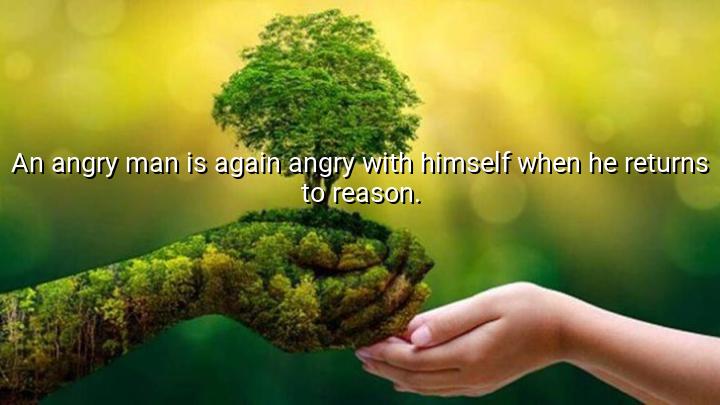




In this quote, Publilius Syrus suggests that anger has a cyclical nature that often leads to regret once the intense emotions subside. He implies that when an angry person later comes to their senses and reflects on their behavior, they realize that their anger was misplaced or excessive, causing them to feel angered with themselves. This observation speaks to the self-awareness that emerges after the storm of anger has passed.
Syrus emphasizes the idea that, in the heat of anger, individuals often act without full consideration of their actions, but once their emotions settle, they return to a state of reason. This shift from irrational emotion to logical thought brings with it the recognition of the harm caused by their earlier outburst. The realization that they were unjustly angry can lead to self-blame and frustration.
The quote also highlights the destructive nature of anger, as it not only affects the person at the moment but also leads to self-reproach later. It underscores the importance of emotional control, suggesting that when individuals give in to anger, they may ultimately feel worse about themselves after the emotion fades, leading to a cycle of frustration.
Ultimately, Syrus's words encourage introspection and the importance of acting with restraint. They suggest that self-regulation of emotions can prevent the feelings of regret that come with realizing the damage caused by uncontrolled anger, reinforcing the value of maintaining composure in challenging situations.

NVNgan Vo
Finally, I wonder how cultural attitudes toward anger influence this cycle. Are some societies more forgiving of anger’s consequences, or do they encourage immediate control and rationality? Understanding these cultural differences might help in creating better frameworks for emotional expression and conflict resolution.
DTDan Thanh
This statement raises the question of whether anger, while often seen as negative, has any positive role in personal development. Can the discomfort of being angry with oneself after reflection motivate change or growth? Publilius Syrus seems to suggest a deeper process where anger leads to insight, despite its initial destructiveness.
NKYen Nguyen Khue
The quote also makes me think about the importance of timing in communication. If anger leads to regret upon reflection, should people delay responding to conflicts until reason returns? Could practicing patience and mindfulness reduce misunderstandings and improve outcomes? This perspective emphasizes the value of thoughtful responses over impulsive reactions.
HHNguyen Huu Hieu
I’m curious about the role of forgiveness, both towards others and oneself, in breaking the cycle mentioned by Publilius Syrus. When someone becomes angry with themselves after calming down, how can they move towards acceptance and healing? This quote suggests a challenging emotional journey that many might struggle with.
DVAnh Dreemurr:D Viet
This quote invites reflection on the internal conflict many face when anger fades and reason returns. How does this self-directed anger affect mental health and relationships? Is it a form of self-punishment or a constructive realization that prompts change? Exploring this could provide valuable insights into emotional regulation and personal growth.