

A broken bone can heal, but the wound a word opens can fester forever.
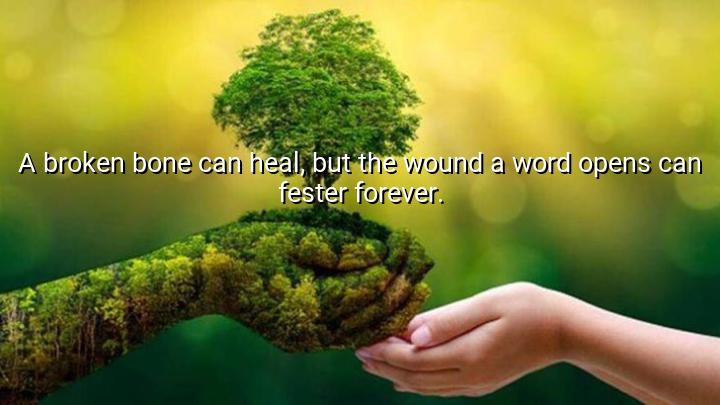




The quote by Jessamyn West — "A broken bone can heal, but the wound a word opens can fester forever." — speaks to the lasting emotional damage that words can inflict compared to physical injuries. While a broken bone may be painful and take time to heal, it is ultimately a temporary condition, and the body can recover. However, the hurt caused by a hurtful word or harsh criticism can leave lasting emotional scars that may not heal easily. Words have the power to affect our psychological and emotional well-being in ways that physical injuries cannot.
West's quote highlights the idea that emotional wounds, unlike physical ones, often remain unresolved unless actively addressed. While a broken bone might be set in a cast and given time to heal, the impact of a negative or damaging word can linger in our thoughts, potentially affecting our self-esteem, confidence, and relationships. The emotional damage caused by words can sometimes fester, becoming more painful over time, especially if not addressed or healed with understanding and care.
This perspective aligns with the understanding that words can shape our perceptions of ourselves and others. They carry power, and their impact can endure far beyond the moment they are spoken. Jessamyn West draws attention to the importance of choosing our words carefully, as once spoken, they can leave an indelible mark on someone’s heart or mind, potentially causing long-lasting harm.
Ultimately, the quote serves as a reminder of the power of communication and the responsibility we have in how we speak to others. While we can recover from physical injuries, the emotional pain caused by words can be more difficult to heal. By being mindful of the words we use, we can prevent causing wounds that might never fully heal, fostering more positive and compassionate interactions with others.

HTNguyen Hong Tri
This metaphor highlights how emotional pain can be more enduring than physical pain. But I wonder, does the ‘wound’ caused by words always fester, or can it sometimes lead to growth and resilience? How do individuals overcome the damage of verbal attacks and rebuild self-esteem? I’d like to explore psychological insights into the long-term effects of words on mental health.
2N22.Khoi Nguyen
Reading this, I feel a mix of caution and hope. It’s frightening that words can cause wounds that ‘fester,’ but it also suggests the need for careful, compassionate communication. How do we create environments—whether in families, workplaces, or communities—where words are chosen to build rather than break? Can apology and forgiveness heal these invisible wounds effectively?
DDLuyen Dao Dinh
This quote makes me think about the power dynamics in communication. Sometimes people don’t realize how their words affect others until it’s too late. Could promoting empathy and mindfulness in how we speak help prevent these wounds? Also, how do cultural differences influence what kinds of words are considered harmful? I’m curious about the role of language in both hurting and healing.
IITCO
I find this idea deeply true yet unsettling. Physical injuries have clear signs and treatments, but emotional wounds from words are invisible and often neglected. How can we better recognize when words have caused lasting harm? Are there effective ways to foster healing in relationships damaged by verbal hurt? It also raises questions about the long-term consequences of careless or cruel communication.
HAPham le Hoang anh
This quote really brings attention to the lasting impact of words compared to physical injuries. It makes me wonder about the responsibility we have when we speak—how often do we underestimate the power of what we say? Can emotional wounds caused by harsh words heal over time, or do some words create permanent scars? I’d love to hear perspectives on how to repair damage caused by hurtful speech.