

A beautiful lady is an accident of nature. A beautiful old lady is a work of art.
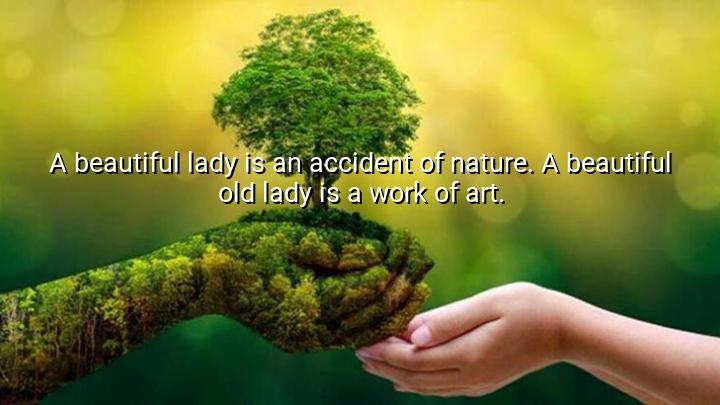




In this quote, Louis Nizer draws a distinction between youth and age in terms of beauty. He suggests that a beautiful lady in her youth is an accident of nature, something that happens naturally and effortlessly, often due to genetic factors or youthful appearance. Beauty in this sense is seen as something inherent and unearned, a product of nature's design. This kind of beauty, while admired, is more superficial and fleeting, tied to physical youth.
On the other hand, Nizer implies that a beautiful old lady represents a work of art. As women age, beauty becomes something that transcends mere physical features and is instead shaped by experience, character, and the passage of time. The process of aging allows inner qualities such as wisdom, grace, and strength to emerge, contributing to a more profound and lasting form of beauty. In this sense, beauty becomes a reflection of how one has lived and grown, much like a crafted masterpiece that develops and matures over time.
Nizer's statement reflects a deeper philosophical view on beauty, implying that true elegance and attractiveness are not merely tied to youthful appearance, but to the maturity and depth that come with aging. A beautiful old woman, having lived through life’s trials and joys, embodies a more holistic and timeless form of beauty, much like a carefully crafted work of art that gains value over time.
Ultimately, Nizer’s quote challenges traditional views on beauty, elevating the aging process to something valuable and artistic. It suggests that beauty is not static and should not be confined to youth, but can evolve into something more meaningful and enduring as one grows older.

DMduc mai
This quote really highlights how we perceive beauty in youth versus age. But I wonder—does calling a beautiful old lady a 'work of art' imply she’s an object to be admired, rather than a subject with agency? It's a lovely compliment on the surface, but it raises deeper questions about how we define value and beauty in different stages of life. Is it admiration or objectification?
UGUser Google
I'm drawn to the romanticism of this statement. There's something affirming in seeing age not as decay but as a transformation into something more intentional and meaningful. Still, I can't help but ask—do we need to frame aging in terms of beauty at all? Maybe dignity, grace, or character could be more central. Or does beauty in this context go beyond the physical?
MDMy Duyen
This quote makes me think about how society views aging, especially in women. It feels like a rare acknowledgment that beauty can deepen with time. But why do we rarely hear similar praise for older men in terms of being 'works of art'? It seems we still hold different standards. I’d love to hear perspectives on whether this quote feels affirming or still subtly patronizing to some.
PLnguyen phi long
There’s something really touching in the contrast between nature and art here. It suggests that beauty in older age is cultivated, not accidental. But does this imply that older women must work harder to be considered beautiful? I'm curious if this idea is empowering or subtly burdensome. Is the quote celebrating maturity or reinforcing expectations that beauty must always be preserved or earned?
TKLuon Thi Ky
This quote is quite poetic, but I wonder if it unintentionally reinforces the idea that beauty in women must always be acknowledged or framed in terms of value. Is it possible to move away from constantly aestheticizing women at any age? While I appreciate the sentiment that aging can add depth and beauty, it still feels rooted in appearance. Shouldn’t we also emphasize wisdom, resilience, and experience over just 'beauty'?