

Wherever the art of medicine is loved, there is also a love of humanity.
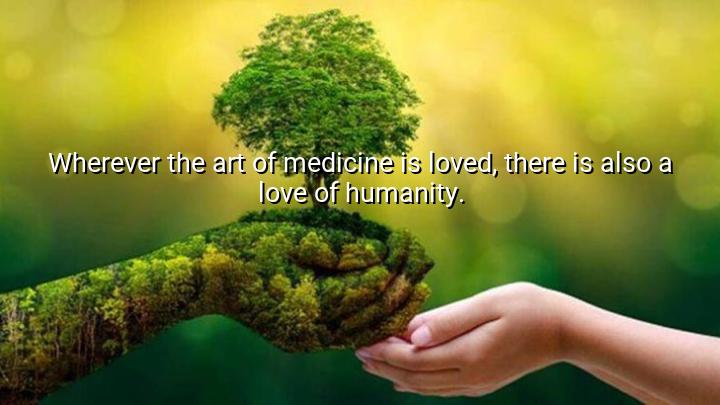




In this quote, Hippocrates suggests that the art of medicine is intrinsically linked to a deep love of humanity. He implies that those who are truly dedicated to the practice of medicine do so not merely for intellectual pursuit or financial gain, but because they have a genuine concern for the well-being of others. For Hippocrates, the essence of being a healer is rooted in empathy, compassion, and a desire to help others live healthier, more fulfilling lives. The art of healing, in this sense, is not just about the science of medicine, but about caring for people on a deeper, emotional level.
The origin of the quote comes from Hippocrates, often referred to as the Father of Medicine. As an ancient Greek physician, Hippocrates is known for his pioneering work in establishing medical ethics and emphasizing the importance of a compassionate approach to healing. His famous Hippocratic Oath remains a cornerstone of medical ethics today, reinforcing the idea that medicine should always be practiced with a sense of moral responsibility and respect for human dignity. This quote reflects his belief that true medical practice requires more than technical skill—it demands a sincere commitment to the health and care of individuals.
Hippocrates’ statement also emphasizes the humanistic side of medicine, urging practitioners to approach their work with a philosophical and compassionate perspective. While medical advancements and techniques are essential, they must be paired with a genuine love for the people whom doctors aim to help. This understanding of medicine goes beyond simply curing illnesses—it involves understanding the human experience and responding with empathy and kindness.
Ultimately, this quote highlights that the foundation of medicine is not just based on scientific knowledge but on a deep-rooted care for others. Hippocrates suggests that to truly excel in medicine, one must love and respect humanity, as the healing process is as much about emotional connection and trust as it is about medical expertise. This timeless message underscores the importance of compassion and humanity in the practice of healthcare.

VMViolent Mia
What strikes me is how Hippocrates links medicine with an ethical worldview. It makes me question whether every aspect of medicine today still honors that connection. Are we training doctors to love humanity, or just to solve problems? This quote challenges me to think about medicine not just as science, but as a calling—one that requires heart as much as intellect. How do we teach future doctors to carry both?
NBNguyen Ngoc Bich
This quote inspires a lot of admiration for those who choose to serve as healers. But it also makes me think about the different ways 'love of humanity' might be expressed—through bedside manner, policy reform, public health advocacy, or even medical research. Does Hippocrates’ view still apply across all those roles, or is he referring more to the personal, patient-facing aspects of care?
VLVy Le
Hippocrates’ words remind me of the nobility that draws people to medicine in the first place. But I wonder—how do we distinguish those who truly love the art of medicine from those who pursue it for status or financial reward? Should love of humanity be a prerequisite to entering the field? If so, how do we even measure or cultivate that in a system focused on test scores and credentials?
N129. Cam Ngoc 10A1
It’s comforting to think that medicine, at its best, is rooted in compassion. But is love for humanity enough to make someone effective in such a demanding field? What happens when emotional investment becomes overwhelming or leads to burnout? I'd love to hear more perspectives on how healthcare providers strike that balance between professional detachment and genuine care for others.
NANhat Anh
I find this quote both beautiful and challenging. In an age of healthcare systems driven by profit, bureaucracy, and burnout, can love for humanity still survive within the practice of medicine? I want to believe it does, but I worry that the pressures on today’s healthcare professionals may erode that sense of compassion. How do we preserve the heart of medicine in such a system?