

We have art in order not to die of the truth.
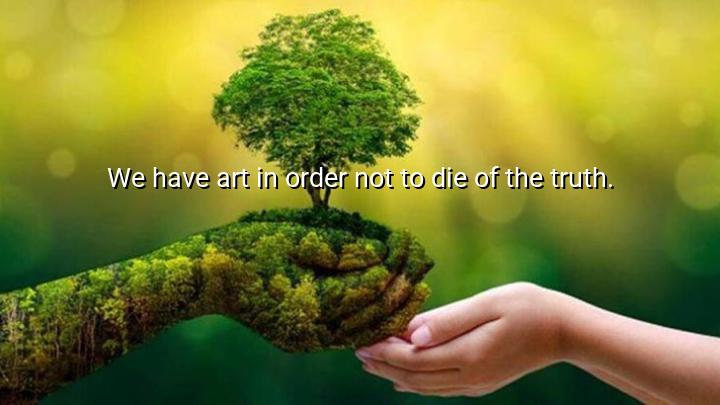




The quote "We have art in order not to die of the truth" by Friedrich Nietzsche reflects his belief that the raw truths of life can be overwhelming and difficult to bear. Art serves as a protective shield, offering a way to process and cope with these harsh realities. Nietzsche suggests that without the emotional and imaginative refuge that art provides, the weight of the truth could be too much for individuals to handle, leading to despair or nihilism.
In this context, art becomes a necessary escape, a means through which people can confront the truth without being consumed by it. Rather than shielding us from reality, art allows us to engage with difficult subjects—such as suffering, death, and the absurdity of existence—in a more manageable, often more meaningful way. It provides an outlet for expression and a channel through which the soul can process the painful aspects of life without being destroyed by them.
The origin of this quote lies in Nietzsche's broader philosophy, which often focused on the tension between the individual's will to live and the crushing forces of truth and existence. Nietzsche saw art as one of the few avenues through which individuals could transcend the suffocating weight of an indifferent universe and find meaning. His work frequently examined how art and creativity offer a temporary reprieve from existential despair.
By stating that we have art to avoid "dying of the truth," Nietzsche highlights the redemptive and survival aspects of creativity. Art allows us to acknowledge the darker sides of life without succumbing to them, offering a means of navigating truth's complexities while still maintaining emotional and psychological equilibrium.

BL20. Nguyen Bao Linh
This quote hit me emotionally. It feels like Nietzsche is saying that art saves us—not physically, but spiritually. I totally relate to that, especially during hard times when music or poetry has been the only thing that made me feel okay. But I’m curious—does this idea put too much weight on the artist? Are they expected to carry the emotional burden of truth for everyone else?
DMDuyen My
Isn't there a contradiction here? If art helps us not die from truth, doesn’t that mean it conceals or distorts reality? So then, is art an act of deception? Or is it more of a transformation—taking something unbearable and turning it into something meaningful? I’d love to hear thoughts from people who make or study art. Does your work feel like a refuge from truth or a confrontation with it?
PHPham Hoa
Can someone explain what Nietzsche might have meant by 'truth'? Is he referring to existential truths, like the inevitability of death or the chaos of the universe? Or could it also mean social and political truths that people find too hard to face? It’s a bold claim that art is what keeps us from collapsing under those truths. But then, does that mean escapist art is just as vital as reflective or critical art?
TVLa Thuy Vy
I find this statement incredibly profound, but also somewhat dark. It makes me question whether truth is inherently painful. Is Nietzsche being cynical here, or just realistic? And how does this apply in our current world, where truth and facts are often debated or distorted? Is art still serving this purpose today—helping us survive emotionally and mentally when reality becomes too intense?
KTMy name is ko ten
This quote really intrigues me. Is Nietzsche suggesting that the raw, unfiltered truth of life is too overwhelming or unbearable without the buffer that art provides? It makes me wonder how much of what we create or consume is actually a coping mechanism rather than pure expression. Do we need beauty and metaphor to soften reality, or is art a way to reinterpret truth in a more digestible form?