

The purpose of art is not the release of a momentary ejection of adrenaline but is, rather, the gradual, lifelong construction of a state of wonder and serenity.
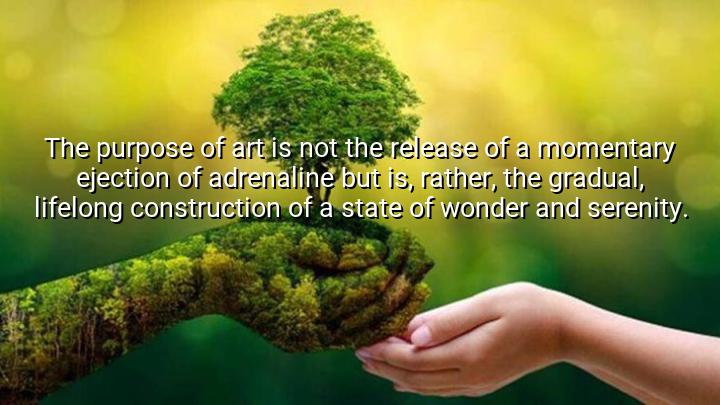




The quote "The purpose of art is not the release of a momentary ejection of adrenaline but is, rather, the gradual, lifelong construction of a state of wonder and serenity" by Glenn Gould highlights his view of art as a long-term, transformative experience rather than a fleeting, intense thrill. Gould, a renowned Canadian pianist and thinker, suggests that art should not merely serve to provoke instant excitement or emotional highs, but should instead work over time to foster a deeper, more enduring sense of wonder and inner peace.
In this context, art is seen as a journey rather than a destination, one that cultivates a lasting emotional and intellectual state. While many people may seek art for an immediate emotional release, Gould proposes that its true power lies in its ability to gradually shape the viewer's or listener's perception, helping them develop a sense of calm and appreciation for the beauty of the world over a lifetime. This perspective emphasizes the importance of reflection and sustained engagement with art, rather than seeking instant gratification.
Gould’s quote also contrasts the typical notion of art as a source of sudden emotional intensity, which can be associated with performances that aim for shock, excitement, or dramatic effect. He suggests that the real value of art lies in its ability to create a state of serenity, where the individual can reflect, find meaning, and appreciate the subtleties of life. This enduring impact of art is often quieter but much more profound, guiding the audience toward a more thoughtful and peaceful way of being.
In essence, Gould’s quote encourages a deeper, more reflective engagement with art, one that builds over time and leads to a sustained state of wonder and serenity. It challenges the modern appetite for instant gratification, offering a vision of art as a tool for personal growth and emotional balance that enhances life in a steady, lasting manner.

MTQuyet Mai Thanh
I find myself both agreeing and wrestling with this idea. While I love the thought of art as something that matures within us, I also believe there's value in raw, visceral, immediate reactions. Can those adrenaline-spiking moments not be gateways to deeper engagement? Maybe the best art finds a way to do both—spark an intense reaction and linger in the soul long after.
PSPham Son
Gould’s quote feels especially relevant to classical music or contemplative visual arts, which don’t always get mainstream attention. Do you think certain art forms are more naturally inclined to produce that lifelong serenity? Or is it more about the mindset of the viewer or listener—how we engage with the work over time rather than the form it takes?
HYHa Yen
There’s something comforting in the idea that art’s purpose isn't tied to momentary thrills but to deeper emotional landscapes. It almost feels like a call to slow down and be more intentional with our experiences. But it also raises the question—how do we teach or encourage appreciation for this kind of art in a world that values speed and reaction over reflection and growth?
CBChi Bui
Gould’s perspective is beautifully idealistic, but I’m curious about how it aligns with modern consumption habits. With short-form content dominating attention spans, are we moving further away from this idea of art as something gradual and lasting? What does it take for contemporary artists to still build that 'state of wonder and serenity' when the audience often demands urgency, immediacy, and constant stimulation?
TSTran Thuy Sam
This quote resonates deeply with me, especially in an era where so much of our culture seems to chase instant gratification. I wonder, though, is there room for both forms of art—those that spark immediate emotional highs and those that cultivate long-term introspection? Can art that electrifies in a single moment still be considered profound, or is it only fleeting unless it contributes to that 'lifelong construction' Gould refers to?