

The perfection of art is to conceal art.
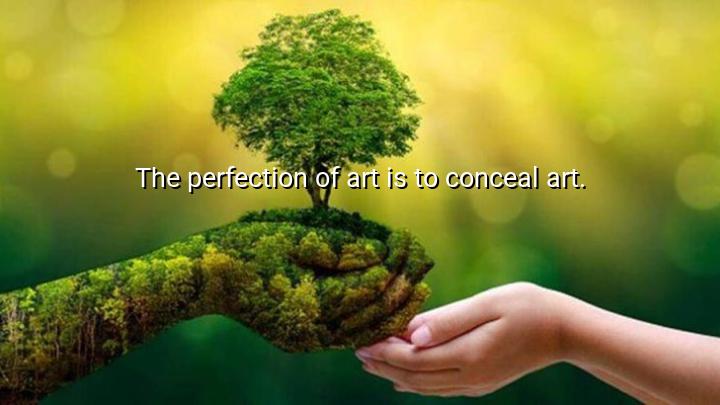




The quote "The perfection of art is to conceal art" by Quintilian suggests that the highest form of artistry is one that appears effortless and natural, masking the skill and technique behind the work. Quintilian, a Roman rhetorician and educator, believed that true art should not draw attention to its creation or craftsmanship but instead create a seamless, organic experience for the audience. In other words, the more invisible the process of creating the art appears, the more perfect it becomes.
Quintilian’s idea reflects the concept of "naturalness" in art, where the artist's effort is hidden, and the result feels intuitive and spontaneous. This is often seen in great works of art, where the composition, execution, and technique are so refined that the audience is immersed in the experience rather than noticing the method behind it. This idea of subtlety is also central in performing arts, literature, and even rhetoric, where the message or emotional impact should take precedence over the mechanics of delivery.
The phrase also emphasizes the idea of artistic mastery. For Quintilian, an artist who has truly mastered their craft does not need to showcase their skill; instead, their expertise should be so ingrained that it flows naturally into the work, appearing effortless. This aligns with the belief that great art doesn’t demand explanation or admiration for its technique but speaks directly to the emotions and intellect of the viewer.
Ultimately, Quintilian's quote reminds us that the greatest art is often the one that feels effortless. The perfection of an artwork lies not in drawing attention to the artist’s effort, but in making the viewer feel as though they are experiencing something genuine and uncomplicated, free from the influence of the artist’s conscious technique.

LDLe Dang
This makes me think of the difference between good and great art. Maybe the highest level of artistry is so seamless, so integrated, that we forget it’s constructed at all. But that also makes me wonder—how do we then teach or critique art? If perfection is in the concealment, are critics and scholars peeling away something the artist meant to hide? Could that interfere with how we experience or value the work?
KNNguyen Khanh Ngoc
Quintilian’s quote is fascinating, especially in relation to storytelling and film. When done well, you’re completely absorbed—you don’t notice the edits, the acting, or the script. But I wonder, is it always better to make art ‘disappear’? Some experimental pieces draw attention to their own construction, and that can be powerful too. Is there room for both approaches in defining artistic perfection, or does this quote suggest only one way to do it right?
TCsolo may thang cui
There’s something elegant about this perspective. It reminds me of watching a dancer move effortlessly or reading a poem that feels like it wrote itself. But is there a danger in idolizing this 'invisible' perfection? Could it discourage people from attempting art if they feel it must be flawless and seamless to be valid? Maybe there’s beauty in the visible brushstrokes, the process, the imperfections. Does hiding the art take away its soul?
KSkhu Sungthi
I'm intrigued by Quintilian’s idea, but it raises a question: how does this apply to modern or conceptual art, where the process is often just as important as the result? Sometimes, exposing the structure or technique is part of the statement. In that case, wouldn’t 'concealing' art work against the purpose? Is this quote better suited for classical art forms, or can it still be relevant in today’s art landscape?
LNNhu Y Le Ngoc
This quote makes me think about the paradox of mastery. If the best art hides the fact that it's art, does that mean the artist’s technique should be invisible? It reminds me of performances or writing that feel so natural you forget there’s any craft behind it. But doesn’t that risk undervaluing the effort and discipline that goes into it? Shouldn’t great art also make us appreciate the skill involved, not just the outcome?