

The essence of all art is to have pleasure in giving pleasure.
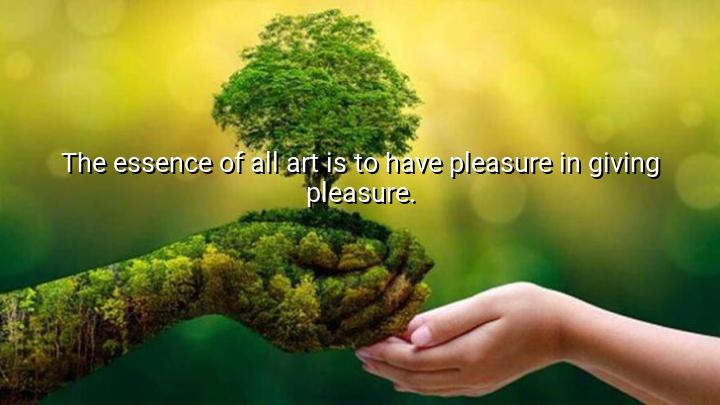




The quote "The essence of all art is to have pleasure in giving pleasure" by Dale Carnegie suggests that the fundamental purpose of art is to create joy and inspire pleasure in others. Carnegie, a well-known author and speaker best recognized for his self-help books on personal development and interpersonal skills, viewed art as a means to share positive emotions and experiences with the audience. According to this quote, the artist’s true fulfillment comes not from personal acclaim or recognition, but from the ability to evoke happiness or satisfaction in others through their work.
Carnegie emphasizes that art’s value lies in its ability to connect with people on a deep emotional level. Rather than focusing solely on the technical aspects or the artist's ego, the true essence of art is found in its impact on the viewer or audience. The artist's joy comes from the pleasure that their work brings to others, whether through visual beauty, emotional resonance, or thought-provoking content.
The idea of "giving pleasure" highlights the selflessness inherent in art. It suggests that artists, at their core, are creators who give of themselves in the hope of sharing something that brings others joy or fulfillment. This aligns with Carnegie’s broader philosophy that success in any endeavor, including art, comes from helping others and focusing on their needs and experiences.
Ultimately, Carnegie’s quote reflects the idea that the true purpose of art is to foster positive feelings in others. It reminds both artists and audiences that art is not merely a personal or solitary pursuit but a shared experience, where the ultimate reward is the pleasure it brings to those who engage with it.

DHDo Dieu Hang
Carnegie's idea is certainly charming and idealistic. But I wonder how it holds up in today’s art world, where artists often aim to challenge or even shock. Is this quote more reflective of a time when art was primarily decorative or moralistic? Or could it still apply today, just with a broader definition of 'pleasure'—one that includes catharsis, intellectual stimulation, or emotional resonance? It's definitely an idea worth unpacking.
NQNhu Quynh
This quote gives me pause. It seems to align with art as entertainment or beauty, but what about art as activism? Some of the most powerful pieces aim not to delight but to disturb, confront, or shake people out of complacency. Is there still 'pleasure' in that for the artist, even if the message is grim? Maybe the pleasure comes from knowing you're making people think, not just feel good. Thoughts?
Hhenry
I love the sentiment, but I question whether this applies equally to all kinds of art. Is an artist less legitimate if their work stems from anger, grief, or confusion rather than joy? There are entire movements—like Dada or abstract expressionism—that seem more rooted in raw emotion or chaos than in pleasure. Does Carnegie’s view diminish the validity of these forms, or is he speaking to a deeper kind of pleasure—maybe spiritual or intellectual?
VALe Van An
Interesting take by Carnegie. But I can’t help but ask—who decides what brings pleasure? Art is so subjective. What’s beautiful or meaningful to one person might be boring or offensive to another. Is the artist’s intent more important than the viewer’s reaction? Or is art only successful if both parties share that sense of pleasure? It’s a delicate balance, and I’d love to hear thoughts on where the line should be drawn.
TBQuyen Tran Bich
I appreciate the optimistic tone in this quote. It reminds me that creating art should bring joy not only to the audience but also to the artist. Still, I’m curious—does this mindset risk oversimplifying art? Isn't there a risk that focusing on 'giving pleasure' might lead to safe or superficial work instead of pushing creative boundaries? Shouldn't true artistic expression sometimes be raw, complex, and even painful?