

The beauty one can find in art is one of the pitifully few real and lasting products of human endeavor.
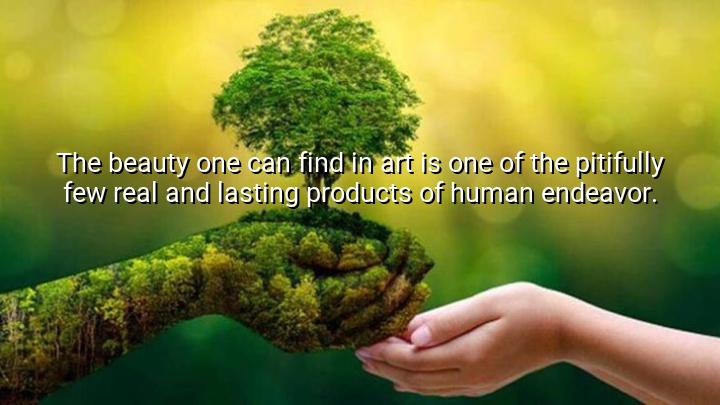




The quote "The beauty one can find in art is one of the pitifully few real and lasting products of human endeavor" by J. Paul Getty reflects on the enduring nature of art amidst the transient and often fleeting nature of human achievements. Getty, an American industrialist and art collector, emphasizes that while much of human effort is ephemeral, the beauty found in art is something that can stand the test of time. Art, in this sense, becomes one of the few truly lasting contributions to human civilization.
Getty’s words acknowledge that many aspects of human endeavor, such as wealth, power, or technology, are often short-lived or subject to change. However, the creations of artists can transcend generations, remaining relevant and admired long after the artist’s time. In this way, art is seen as a timeless product of human creativity that continues to resonate with people across cultures and eras.
The quote also suggests that while art is a reflection of human culture and emotion, it is also a way for individuals to leave a meaningful legacy. For Getty, the enduring value of art lies in its ability to communicate across time, offering insights into the human experience that remain accessible and significant for future generations.
Ultimately, Getty’s perspective positions art as a powerful and unique achievement in human history. In a world where many efforts may fade, the beauty of art stands as a testament to the lasting impact of human creativity, offering both a personal and cultural legacy that endures long into the future.

NHnhu huynh
This quote feels both humbling and inspiring. It makes me reflect on what we leave behind and what truly endures. Art seems to hold emotional truth in a way that few other things can. But it also raises a question for me—why is beauty such a core component of art’s lasting value? Can ugly or disturbing art also qualify under Getty’s definition if it captures a real human experience? Is beauty always necessary for longevity?
DDnguyen dinh duy
There’s something really powerful about this quote when you think about it from a historical perspective. Civilizations come and go, but their art often remains. The pyramids, cave paintings, medieval manuscripts—they outlast wars and governments. So maybe Getty is pointing to how art outlives everything else we build. But does that mean we should prioritize art more in our modern society? It feels like it’s often the first thing defunded or dismissed.
AAAnh Amee
I love how this quote reminds me that art isn’t just entertainment—it’s a legacy. But I’m also wondering if this elevates art to a place where it becomes inaccessible to everyday people. Does calling it one of the ‘few’ lasting human endeavors create a barrier, like only certain forms of expression count as ‘real’ art? I think beauty can exist in everyday creativity too—like in design, craft, or even well-written code.
TMNguyen Thien Minh
I can’t help but feel a twinge of melancholy reading this quote. It’s almost as if Getty is mourning the lack of meaningful output from humanity. Do you think that’s a fair judgment? Is our cultural value really distilled down to just art? It’s a beautiful idea, sure—but it also sounds a bit cynical. Then again, when I see how art connects people beyond language and time, maybe he’s right to place it on such a pedestal.
HNTan Hoang Nguyen
This quote hits me hard, especially in a world that feels increasingly disposable. It’s comforting to think that the beauty in art endures where so much else fades. But I’m curious—what qualifies as ‘real’ and ‘lasting’? Some artworks are only fleeting, like performance art or street murals that vanish. Does the emotional impact count more than physical preservation? Maybe the legacy of art isn’t in objects but in the way it shapes our consciousness.