

The art of living well and the art of dying well are one.
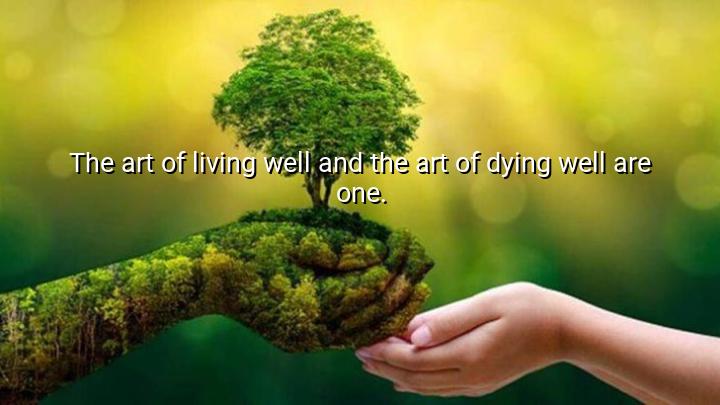




The quote "The art of living well and the art of dying well are one" by Epicurus reflects the philosopher's belief that the way we live our lives is intrinsically connected to how we approach death. Epicurus, an ancient Greek philosopher, is often associated with hedonism, which emphasizes the pursuit of happiness and the avoidance of pain. In this quote, he suggests that to live well—meaning to live a life of contentment, virtue, and peace of mind—is inherently linked to how we face our inevitable end. The art of both living and dying requires a thoughtful and mindful approach.
Epicurus implies that dying well involves accepting death as a natural part of life, free from fear and anxiety. For him, living a life of pleasure, free from unnecessary pain and fear, prepares the individual to face death with serenity and understanding. In his philosophy, the fear of death often prevents people from living fully and peacefully. Therefore, living well—through cultivating wisdom, friendship, and understanding—directly contributes to the ability to face death without fear.
The idea that the art of living and dying are one suggests a holistic approach to life, where both aspects are not separate but are part of a larger philosophical journey. Epicurus stresses that a person who lives a fulfilling, virtuous life will naturally be able to meet death with the same calmness and grace. This perspective offers a way of living that focuses on self-awareness and acceptance, understanding that both life and death are parts of the same natural process.
Ultimately, Epicurus’s quote emphasizes the unity between living well and dying well. To live a good life, one must come to terms with death as an inevitable and natural event, accepting it without fear. This mindset encourages a life led by reason, enjoyment of simple pleasures, and a focus on what truly matters, ultimately leading to peace both in life and in the face of death.

NANgoc Anh
Does this quote imply that living well requires us to confront death, rather than ignore it? I’ve always found that hard to do—it's scary, after all. But maybe embracing that fear is what helps us live more intentionally. What habits or mindsets would actually reflect this unity between living and dying? And do people who reflect on death more often tend to live more purposefully?
DTNguyen Nhat Dan Thao
Reading this, I’m struck by how Epicurus seems to erase the divide between life and death. But in a world obsessed with longevity and avoiding aging, is this kind of thinking even realistic today? I’d love to explore how this philosophy would translate in cultures that celebrate youth versus those that honor death as part of life. Does our culture allow for this kind of harmony between living and dying?
Nngan
This quote resonates with the idea that our daily choices build the foundation for our final moments. If that’s true, then does living ethically and meaningfully naturally prepare us for death? I’m curious whether this perspective can help reduce anxiety around dying. Could cultivating gratitude, mindfulness, or even simplicity in life be forms of preparing ourselves to die with dignity and peace?
TNTu Ngo
I find this statement profound but also a little unsettling. It makes me ask: Can anyone really master the 'art' of dying? Is it about acceptance, legacy, or simply making peace with impermanence? If living well and dying well are the same, how do we measure either? I’d love to hear interpretations of what it means to die well from both a philosophical and practical perspective.
THThao Han
Epicurus' quote really challenges me to think about how we define a 'good life.' If living well means being at peace with dying, does that imply we should constantly be aware of our mortality in order to live more fully? I wonder how this philosophy fits into modern life where death is often treated as taboo or avoided altogether in conversation. Should we be more open about death to truly appreciate life?