

Love the art in yourself and not yourself in the art.
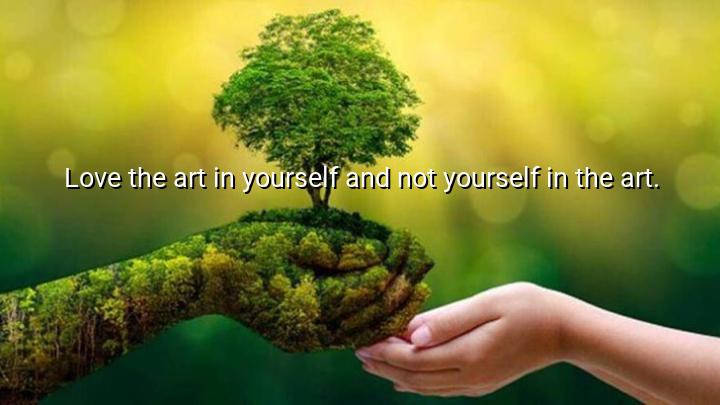




The quote "Love the art in yourself and not yourself in the art" by Constantin Stanislavski speaks to the idea of selflessness and humility in the creative process, especially in the context of acting. Stanislavski, a renowned Russian theater practitioner, emphasizes that artists, particularly actors, should focus on their art—the work they create—rather than seeking personal recognition or validation. By loving the art in oneself, the artist can put aside personal ego and allow their true creative expression to emerge, fostering a deeper connection to the performance and to the audience.
In this context, Stanislavski is advising against the temptation of vanity or self-obsession that can sometimes accompany the artistic process. When artists prioritize their own image or self-promotion in the work, the art itself can become secondary. Instead, the focus should be on serving the art with dedication and integrity, allowing the performance to transcend personal desire and resonate with authenticity. This mindset helps artists remain true to their craft and elevate the impact of their work.
The origin of this quote stems from Stanislavski’s own philosophy and system of acting, which revolutionized theater in the early 20th century. His approach emphasized emotional truth, self-discipline, and the importance of fully immersing oneself in the character. Stanislavski believed that an actor’s personal involvement in the art should be about embodying the role rather than seeking attention or admiration for their own performance.
By saying "Love the art in yourself and not yourself in the art," Stanislavski urges artists to prioritize the craft over the self. The true purpose of art is to express something greater than the individual, and this can only be achieved when the artist is humble, focused on the work, and not distracted by personal gain or acclaim.

VTNguyen Van Thanh
Stanislavski's quote strikes me as a call to devotion, to value craft over self-image. It makes me think about discipline—how many artists today are more in love with the idea of being an artist than with the work itself? This quote feels timeless, yet maybe even more relevant now in a culture that often rewards style over substance. How do we stay focused on the art, not the applause?
(HNguyen Quang Dai (FPL HCM)
I’m curious—can this quote be interpreted as a warning against narcissism in creativity? In today’s world of hypervisibility and online branding, it’s common for artists to become obsessed with how they appear in their work. But doesn’t every piece of art, to some degree, reflect the artist? Where do we draw the line between honest self-expression and self-indulgence? I’d love to hear how others interpret that boundary.
MD45-Nguyen minh Duc
This quote feels like a reminder to stay grounded as an artist. But I wonder—does this mindset conflict with the idea that art is a form of self-expression? If you're told to love the 'art in yourself,' how do you balance that with the emotional or autobiographical elements many artists pour into their work? It's a beautiful sentiment, but I think it raises complex questions about ego and authenticity.
TTLuong Truong Thi
I love how this quote flips the usual narrative. It’s so easy to fall into the trap of using art to validate our own identity rather than letting art be the goal in itself. It makes me think about performance, especially in theater or film—are actors losing something when they use the stage just to showcase themselves? Could this philosophy apply to influencers and social media creatives too?
DHDung Hoang
This quote really challenges the ego-driven aspects of being an artist. It makes me wonder—how can artists maintain passion and commitment to their craft without getting consumed by the desire for recognition or fame? Is it truly possible to separate one's self-worth from how their art is received? I respect the ideal, but in real-world creative industries, isn’t there always a tension between personal humility and public visibility?