

Life is short, the art long.
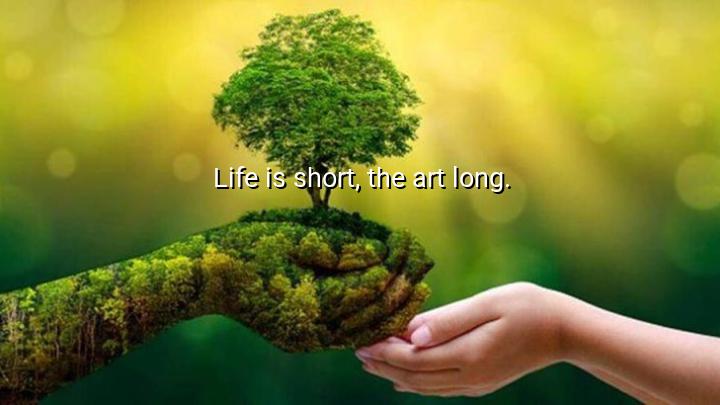




The quote "Life is short, the art long" by Hippocrates reflects the contrast between the brevity of human existence and the enduring nature of art. Hippocrates, often regarded as the father of medicine, was suggesting that while our lives are limited and fleeting, the pursuit of art—whether it is in medicine, philosophy, or any other discipline—requires time, dedication, and long-term effort. The "art" in this context can be seen as any skill or craft that demands a deep, lifelong commitment.
Hippocrates' words highlight the temporary nature of life, where we are constrained by time, and yet, the mastery of any craft or discipline is a journey that unfolds over time. The phrase suggests that while we may face limitations in our lifetime, the work we do, especially in the realm of art or intellectual pursuits, has the potential to outlast us and have a lasting impact. It is a reminder that the process of mastering any art requires patience and persistence, qualities that are often overlooked in a world obsessed with immediate results.
The origin of this quote comes from Hippocrates' perspective on medicine, where he was advocating for the dedication needed to truly understand and practice healing. He recognized that while life itself is brief, the knowledge and skill required to practice medicine—or any art—cannot be rushed. The art of healing, for example, is something that requires lifelong learning, much like the pursuit of any great craft.
For those pursuing any form of art, this quote serves as a reflection on the importance of long-term commitment and the understanding that mastery cannot be achieved quickly. It encourages individuals to embrace the journey of development, knowing that the rewards of creating or mastering something valuable extend beyond the limitations of their own lifetime. The art may live on, long after the artist is gone.

TDThanh Duy
This quote feels like a meditation on mortality and ambition. If life is inherently brief but the knowledge or beauty we create can endure, how do we decide what’s worth doing? Do we chase longevity in our work, or focus on the present moment and trust that what lasts will last? I’d love to know how this applies in different professions—medicine, yes, but also music, architecture, and even parenting. What's your ‘art’?
NKcao nam khanh
I’ve always wondered about the tension this quote brings up—should we focus on producing as much as possible in our short time, or slow down and accept that mastery takes forever? It’s almost like a philosophical tug-of-war between urgency and patience. I think a lot of burnout comes from misunderstanding this balance. What’s the healthiest mindset when your ambitions stretch further than your lifespan allows?
TLGia minh Trinh le
It’s a sobering quote, but not necessarily a sad one. To me, it suggests that while we can’t conquer everything in a single lifetime, we can contribute something meaningful to a larger tradition. But it also raises a question: in an age of speed and instant results, are we losing patience for 'long' arts like writing, composing, or scientific research? Can this old wisdom still resonate in a world driven by immediacy?
MLQuang Minh Le
This quote makes me reflect on time and mastery. If our lives are fleeting but the pursuit of skill or truth is endless, does that justify dedicating a lifetime to a craft? Or is it more about accepting that true expertise is bigger than any one person? I also wonder if the quote encourages collaboration—passing knowledge along—so the 'art' continues even when the individual doesn't. It feels almost like a call for mentorship.
TTnguyen thanh truc
It’s both inspiring and kind of overwhelming. There’s this idea that what we do—if done well—can outlast us, but it also means we might never see the full fruits of our labor. How do you stay motivated knowing you’re contributing to something that may only be appreciated or understood long after you’re gone? It makes me think about legacy and whether that's really the point of artistic or intellectual work.