

Life imitates art far more than art imitates Life.
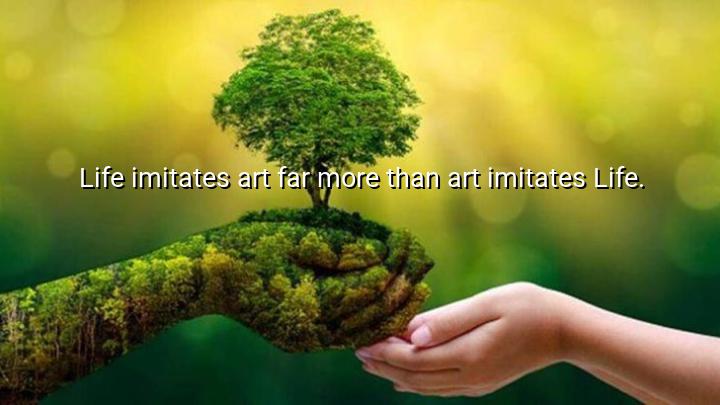




The quote " Life imitates art far more than art imitates Life" by Oscar Wilde challenges the conventional notion that art merely reflects or represents the real world. Wilde, known for his sharp wit and unconventional views, flips the traditional idea by suggesting that the reality we experience is more heavily shaped by art than art is shaped by reality. According to Wilde, the stories, images, and ideals presented in art influence how we perceive and interact with the world around us, molding our actions, beliefs, and even the course of history.
In this context, Wilde is emphasizing the power of art to shape human experience. Instead of being a passive reflection of life, art actively guides how we see ourselves and the world. For example, the ideals and narratives presented in literature, theater, or visual art often become a lens through which individuals interpret their surroundings and experiences. Through this lens, art doesn't just depict life—it becomes a model that people strive to replicate or respond to in their own lives.
Wilde’s quote also speaks to the transformative nature of art. Over time, art—whether through painting, music, literature, or other forms—can introduce new ways of thinking and new cultural norms that eventually influence how society behaves. Rather than simply depicting life as it is, art has the ability to create new ideals and ways of being, which people then adopt, shaping future life in its image.
In essence, Wilde’s statement reflects his belief in the revolutionary and transformative power of art. He asserts that life is not just a passive observer of art, but actively shaped and influenced by it. The relationship between art and life is not one of imitation, but rather one of influence, where art serves as the driving force behind how we construct and live our reality.

PVPhuc Vo
I think Wilde was ahead of his time with this. Think about fashion trends, architecture, or even language—so much of it begins in creative expression and then trickles into daily life. But I wonder, is there a danger in this? When people start modeling life on idealized or dramatized art, could it lead to unrealistic expectations or a disconnect from reality?
CPTran Cong Phuc
Interesting idea, but can this really be true across cultures? Art is so diverse and shaped by local experiences—does life still end up copying it? I’d love to see examples from non-Western traditions where this concept might or might not apply. Maybe in some places, art is more grounded in community memory and less likely to dictate behavior. Or does Wilde’s point hold globally regardless of origin?
CDCuong Diep
I find this quote a bit unsettling. If life imitates art more, does that mean we’re living in a sort of constructed performance? It makes me question the authenticity of our experiences. Are we truly original in our emotions and decisions, or are we just echoing narratives we’ve absorbed from art over time? What does this mean for individuality and free will?
????
Is Wilde suggesting that people model their lives after what they see in books, films, and paintings? If so, does this imply that art holds a kind of power over society's values and behaviors? I’m curious about the implications for social media today, where visual aesthetics often dictate lifestyle choices. Has this phenomenon become even more intense in the digital age than in Wilde’s time?
PNtho pham ngoc
This quote makes me wonder: was Wilde trying to be provocative, or is there a deeper truth here? It challenges the common belief that art is a reflection of the world. Could it be that our perception of life—our emotions, behaviors, even aspirations—is subconsciously shaped by the stories, images, and aesthetics we consume? How much of what we consider 'real life' is actually inspired or influenced by artistic ideals?