

It's very important that we re-learn the art of resting and relaxing. Not only does it help prevent the onset of many illnesses that develop through chronic tension and worrying; it allows us to clear our minds, focus, and find creative solutions to problems.
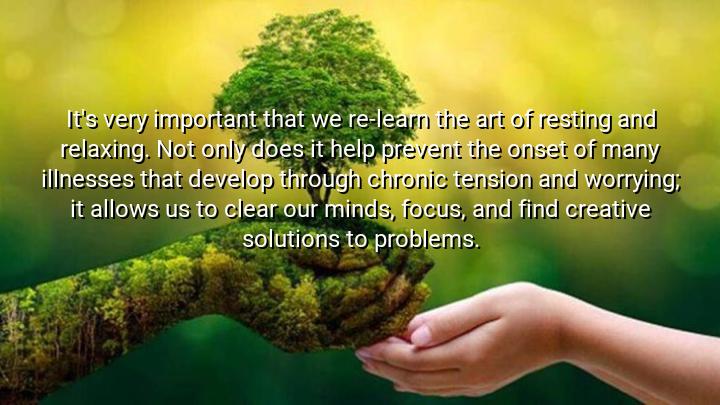




The quote "It's very important that we re-learn the art of resting and relaxing. Not only does it help prevent the onset of many illnesses that develop through chronic tension and worrying; it allows us to clear our minds, focus, and find creative solutions to problems" by Thich Nhat Hanh emphasizes the significance of resting and relaxing in our daily lives. Thich Nhat Hanh, a renowned Vietnamese Zen master and spiritual leader, advocates for mindfulness and peace in both mind and body. He suggests that, in a world filled with stress and constant activity, it’s crucial to reconnect with the simple practice of relaxation, as it plays a vital role in maintaining both physical and mental well-being.
The quote highlights that chronic tension and constant worrying can lead to various illnesses, both physical and psychological. By taking time to rest, we give ourselves the opportunity to prevent the harmful effects of stress. Thich Nhat Hanh stresses that relaxation is not just about taking breaks, but about engaging in a mindful practice of calmness, which enables us to alleviate the pressures of daily life and maintain a healthier balance.
Additionally, he points out that resting is not only about recovery but also about clarity. When we allow ourselves to clear our minds through relaxation, we become better able to focus and tap into our creativity. In moments of stillness, our thoughts are no longer clouded by distractions or tension, which allows us to approach problems with a fresh perspective and discover innovative solutions.
Ultimately, the quote emphasizes that relaxation and rest are essential tools for living a more mindful and balanced life. Thich Nhat Hanh’s message is clear: by cultivating the ability to pause, we not only preserve our health but also enhance our ability to think, create, and solve problems effectively.

ANanh nguyen
Thich Nhat Hanh always cuts to the core of what matters. This quote makes me think—are we even aware of how tense and distracted we are on a daily basis? I know I’ve gone days without really 'resting,' even when I technically had free time. Is it possible that resting isn’t just about time off, but also about mindfulness in how we use that time? If so, how can we cultivate that awareness?
Lle
The part about finding creative solutions through rest really hit me. I’ve often found my best ideas not at my desk, but while walking, napping, or just doing nothing. Why don’t more organizations encourage rest as a strategy for innovation? Imagine if corporate culture started prioritizing quiet time as much as meetings. Could it change the way we approach problem-solving entirely?
LHlinhanh hoang
It’s interesting how this quote highlights rest as an 'art'—something we must learn and practice. Do you think society has forgotten how to rest well, or did we ever really know how? With so much pressure to always be 'on' and productive, I feel like rest now requires intentional planning. Should schools or workplaces teach this skill the same way they promote efficiency and time management?
ABAnh Bui
This resonates deeply with me, especially the idea that chronic tension and worry can physically harm us. But how do we differentiate between meaningful rest and just mindless distraction like scrolling on our phones? I think we need a cultural shift in how we define relaxation. What practices genuinely nourish us versus just temporarily numb us? I’d love to hear what others do to rest in ways that restore clarity and creativity.
JJKonm jungkook jeon
I find this quote both comforting and confronting. In a world that glorifies hustle culture, taking time to rest almost feels taboo or even lazy. Why have we drifted so far from valuing relaxation as a necessary part of health and productivity? I wonder what practical steps we can take to truly integrate rest into our daily lives without guilt, especially when so many responsibilities feel non-negotiable.