

It's not new that architecture can profoundly affect a place, sometimes transform it. Architecture and any art can transform a person, even save someone.
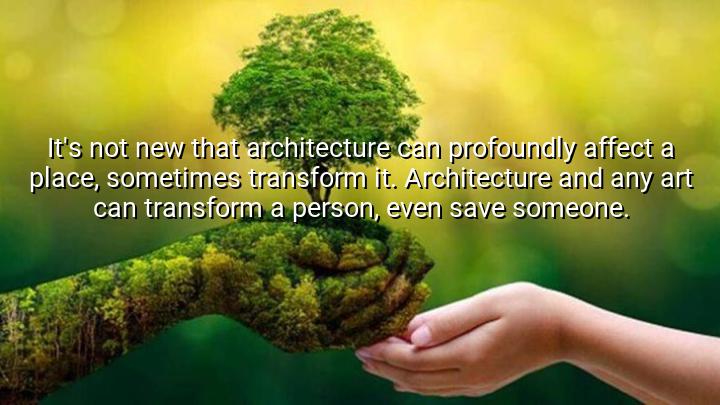




Frank Gehry’s quote, "It's not new that architecture can profoundly affect a place, sometimes transform it. Architecture and any art can transform a person, even save someone," speaks to the profound impact that architecture and art can have on both the physical environment and the individuals who experience them. Gehry, a renowned architect known for his unconventional and innovative designs, recognizes that architecture goes beyond just creating functional spaces; it can change the way people experience a place and, at its best, inspire or even transform them.
The phrase "profoundly affect a place" suggests that architecture has the power to shape the character of its surroundings, influencing how people interact with the space and how they feel within it. For Gehry, the built environment is not merely a backdrop to life, but an active element that can influence the way people live, work, and connect with each other. He also emphasizes that architecture, like all forms of art, can carry emotional or psychological significance, offering a deeper connection beyond aesthetics.
The quote also touches on the transformative power of art more generally, suggesting that it can have a deeply personal effect on individuals. By saying that art can "save someone," Gehry acknowledges the ability of creative expressions like architecture to provide solace, inspiration, or healing. Whether it’s through creating a sense of belonging, promoting reflection, or offering a sense of beauty in the world, art has the potential to positively influence the emotional and mental well-being of those who engage with it.
Ultimately, Gehry’s statement reinforces the idea that architecture and art are not just about aesthetics or functionality—they are tools for personal and collective transformation. By shaping environments that inspire and uplift, architecture and art can create spaces that change lives, fostering a sense of connection, identity, and healing.

KGKhanh Giang
Gehry’s take here resonates with me, especially in how spaces can influence our mental health. I’ve felt completely different walking into a cathedral versus a cramped office cubicle. But where’s the line between transformative art and simply ‘good design’? Does something need to be radical or groundbreaking to have this effect, or can even small, thoughtful changes in architecture deeply affect our lives?
HA03. Nguyen Hoang Anh
I love the hopeful tone here, but it also makes me question: is everyone equally affected by architecture or art? Some people seem deeply moved by their environment, while others are indifferent. Is it about the design itself, or the sensitivity of the observer? Could the ability to be ‘transformed’ by art or architecture be something that needs to be cultivated or taught?
LLeeAnh_BR2
This quote makes me wonder—if art and architecture can transform people or places, why do we still settle for so much uninspired, lifeless design in public spaces? It seems like such a missed opportunity. Imagine if hospitals, schools, or shelters were created with this philosophy in mind. Would it lead to healthier, happier societies? Or is that just an idealistic vision that’s too expensive to realize?
TTTrang Tran
I’m fascinated by this idea of architecture being able to ‘save’ someone. It raises the question: do we underestimate the emotional or spiritual needs of people in how we design cities and buildings? There’s so much focus on efficiency and cost, but maybe we’re missing the deeper, human dimension. Should architecture students be trained not just as designers, but as emotional or even therapeutic influencers?
BHNg Bao Han
Gehry’s statement made me think about how rarely we acknowledge the emotional or psychological influence of buildings and public spaces. Can the design of a space really contribute to someone’s healing or personal transformation? I’d love to hear more about real-world examples where architecture has played that kind of role. What types of environments tend to have this kind of profound impact on individuals or communities?