

It is through art, and through art only, that we can realise our perfection.
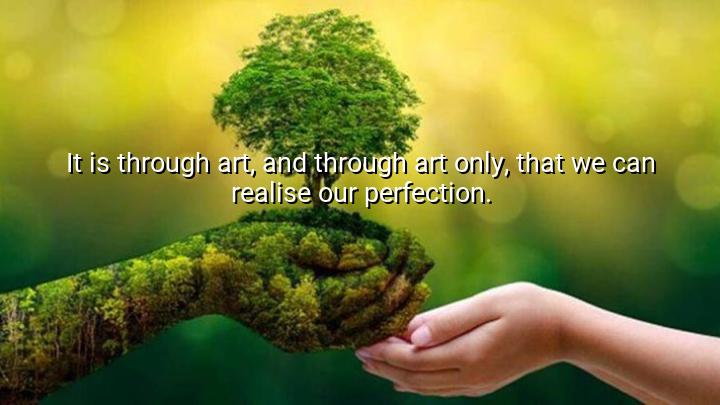




The quote "It is through art, and through art only, that we can realise our perfection" by Oscar Wilde suggests that art has the unique ability to help us understand and achieve our highest potential as individuals. Wilde implies that art is not just a form of expression, but a means of discovering the deeper, perfect aspects of ourselves. Through the creative process and the appreciation of art, we can access parts of our being that are otherwise hidden or inaccessible.
Wilde, known for his wit and philosophical views on beauty, often explored the idea that art serves as a mirror to the soul. In his view, art has the power to transcend the mundane and reveal a higher truth about human nature. By engaging with or creating art, individuals are able to connect with a sense of perfection that goes beyond the imperfections of everyday life. This connection can lead to personal growth and a deeper understanding of one’s potential.
The origin of this quote comes from Wilde’s belief in the transformative power of aesthetic experience. He saw art as a tool for personal and collective evolution, where the pursuit of beauty and truth could lead to self-actualization. In his works, Wilde often emphasized the importance of embracing creativity as a path to enlightenment, where art is not merely a representation of the world, but a means to elevate the individual’s experience of life.
For Wilde, art was a bridge between human flaws and the concept of perfection. By engaging with it, we are invited to challenge our limitations and strive for a higher understanding of ourselves. Through this journey, art reveals the hidden, perfect aspects of our character and helps us realize the fullest expression of our being.

HHi
Wilde’s quote makes me think about the transformative nature of creativity. But is he speaking metaphorically, or does he mean this in a literal, almost spiritual sense? I’m also curious about the word ‘perfection’—what does that mean in this context? Is it moral flawlessness, self-actualization, or something purely aesthetic? His wording opens up so many interpretations, and I’d love to know how different cultures might respond to this idea.
BPBinh Pham
I really resonate with this idea. Art often feels like the only space where I can be my fullest, truest self. When I write or draw, I touch something inside me I don’t find anywhere else. But I do wonder: does this quote apply more to the artist than the audience? Can viewers of art also realize their perfection, or is Wilde elevating the creative process above the act of appreciation?
TBThanh Bamboo
Oscar Wilde has a flair for dramatic statements, but I wonder if he really believed this. Was he suggesting that art reveals a truer version of ourselves than ordinary life ever could? If so, what kind of art does that—fine art, music, literature, or something more personal like journaling or sketching? And is this ‘perfection’ he mentions emotional, moral, or something else? It’s a beautiful thought, but I wish it were more specific.
NANguyen Ha Nhat Anh
This quote feels both inspiring and elitist. I get that art can awaken something profound in us, but can everyone access that realization? What about people who don't have the time, education, or resources to experience or create art? Are they denied this path to perfection Wilde speaks of? I’d like to hear thoughts on whether the arts are a universal tool for self-realization or a luxury for the few.
NDNguyen Dan
I find Wilde's claim incredibly bold—why 'through art only'? Is he dismissing science, philosophy, or even personal relationships as ways to realize our potential? I love art, but I’m not sure it’s the only path to perfection. Maybe he’s talking about a specific kind of perfection—like emotional or aesthetic fulfillment. Still, I wonder if that excludes people who don’t engage deeply with art. Is their potential less accessible somehow?