

If art is to nourish the roots of our culture, society must set the artist free to follow his vision wherever it takes him.
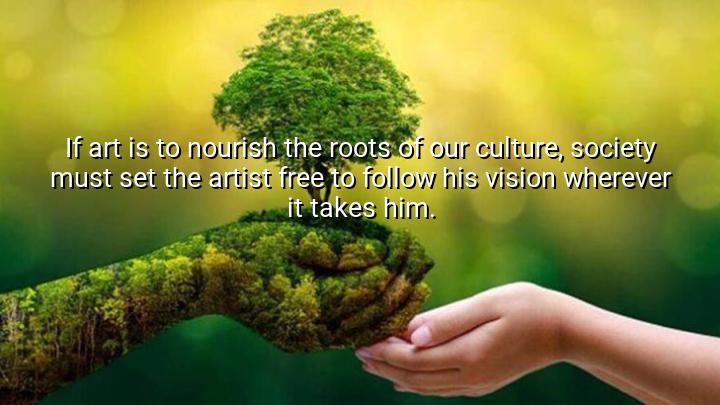




The quote "If art is to nourish the roots of our culture, society must set the artist free to follow his vision wherever it takes him" by John F. Kennedy speaks to the essential role that art plays in the development and preservation of culture. Kennedy, in this statement, emphasizes that art is not just a form of personal expression but a vital force that shapes and nurtures the identity and values of a society. In order for art to flourish and continue to enrich culture, the artist must be given the freedom to create without limitations or constraints imposed by society.
Kennedy's quote also highlights the need for freedom in the creative process. The artist must be allowed to explore and express their own unique vision, even if that vision challenges societal norms or conventions. Only by allowing artists to pursue their ideas without fear of censorship or restriction can art reach its full potential and have a transformative impact on culture. The quote suggests that the vitality of culture depends on the artist’s ability to push boundaries and express truths that may not always be comfortable or popular.
This perspective aligns with Kennedy’s broader views on freedom and the importance of fostering an environment where creativity can thrive. By setting the artist free, society encourages the kind of innovation and intellectual exploration that leads to cultural growth and progress. Art becomes a mirror to society, reflecting both its strengths and its flaws, and offering new perspectives on the human experience.
Ultimately, Kennedy’s quote reminds us that art is a powerful tool for cultural development and that the artist plays a critical role in shaping the future of society. By granting the artist the freedom to follow their creative instincts, we ensure that art continues to nourish and inspire the roots of our culture, enriching our understanding of the world and the possibilities within it.

UGUser Google
Kennedy’s quote emphasizes the importance of artistic freedom, but is it realistic to expect society to provide complete freedom? How do we define where the line between artistic freedom and societal responsibility lies? Is it possible for art to have its full impact when it is entirely unrestricted, or does there need to be some kind of structure to help guide it? What would the world look like if artists had no boundaries at all?
QTDiem Quynh Tran
I love the idea that art nourishes the roots of culture, but I’m curious about how that plays out in practical terms. How does society know when an artist’s work is truly beneficial to culture versus being a mere reflection of individual expression? Does society have a responsibility to nurture all types of art, even if they don’t immediately see the value in them? And can an artist create freely without the fear of rejection or censorship?
B1Kim Khanh b 11.8
Kennedy’s perspective on art and freedom makes me wonder if artists can truly create without the constraints of their environment. Can the most groundbreaking art emerge when an artist is unconstrained by societal expectations, or does society play a vital role in guiding the artist’s vision? What would happen if society didn't support or understand the artist’s freedom—would art still survive and flourish in such an environment?
N113Nguyen Ho Thao Nguyen 11a9
The idea that society must set artists free to follow their vision is powerful. But what happens when an artist’s vision leads them to a path that is controversial or divisive? Does society still have an obligation to support them, or should there be limits to artistic freedom? How do we ensure that the art being created is nourishing our culture and not simply pushing boundaries for the sake of rebellion?
TMKhue Pham Tran Minh
It’s fascinating how Kennedy connects the nourishment of culture to the freedom of the artist. Does that mean artists are the true architects of culture, and society is just the canvas they work on? Can art truly thrive without restrictions, or do some constraints push artists to create better, more impactful work? How do we balance freedom with accountability, especially when the artist's vision challenges established norms?