

Every artist was first an amateur.
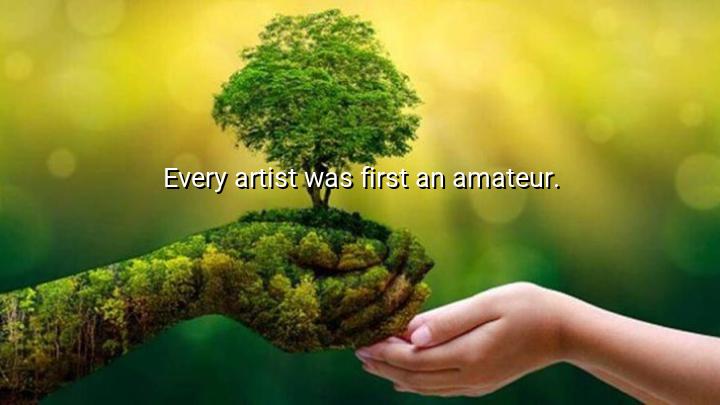




The quote "Every artist was first an amateur" by Ralph Waldo Emerson highlights the beginning of every artist's journey, emphasizing that all great artists started with no experience or expertise. It serves as a reminder that mastery and skill are developed over time, and no one is born with innate artistic perfection. Every accomplished artist, no matter how skilled, had to start from a place of learning and growth.
Emerson, a prominent philosopher and writer, believed in the importance of self-reliance and the development of personal potential. This quote aligns with his philosophy that everyone has the ability to improve and evolve, no matter their starting point. By acknowledging the amateur phase, Emerson encourages people to embrace their early efforts without fear of failure, knowing that progress comes with time and dedication.
The origin of this quote is grounded in Emerson's views on individualism and personal development. He often spoke about how important it is for individuals to push through initial struggles and doubts, trusting in their ability to improve. In this context, the quote is meant to inspire not only artists but anyone pursuing a skill or passion, reminding them that even the most accomplished people had humble beginnings.
For aspiring artists, Emerson's words can be empowering. It reassures them that growth is a natural part of the journey, and no one should be discouraged by their early limitations. The key is to continue honing one's craft, knowing that the amateur stage is merely a stepping stone to achieving mastery.

TLNguyen Thi Thuy Linh
This quote should be printed on every art classroom wall. It takes the fear out of starting. But I also think it can apply beyond art—writing, coding, cooking, anything creative. If we let go of perfection and embrace being beginners, maybe more people would try. Still, I’m curious: does being an amateur have its own artistic merit? Or are we always striving to leave that phase behind?
HMPham Ha My
I appreciate the quote because it feels like a soft nudge toward grace. We’re often too quick to judge beginners, especially ourselves. But if all artists began as amateurs, then maybe failure and awkwardness are essential steps, not setbacks. I do wonder, though, how one knows when they've transitioned from amateur to artist. Is it a feeling, a title, or recognition from others?
TTai
It’s a humbling and democratic idea. Everyone starts somewhere. But I can’t help but wonder—what role does access and privilege play in an amateur becoming an artist? Not everyone gets the time, resources, or support to evolve past those early stages. Does this quote ignore that part of the equation, or should we take it more as a general truth about growth and perseverance?
QCNguyen Quynh Chi
This quote makes me reflect on the idea of talent versus persistence. If every artist starts as an amateur, does that mean anyone can become one with enough dedication? Or is there still an underlying spark or passion that separates those who continue from those who give up? I'm curious how people interpret this in terms of natural ability versus hard-earned skill.
NHPhuc Nguyen Hoang
Isn’t it wild how often we forget this simple truth? When I look at the work of great artists, I rarely stop to think about the awkward sketches and failed attempts they must've gone through. Why do we put so much pressure on ourselves to be good right away? Maybe embracing the amateur stage is the most honest part of becoming an artist. Do you think today's culture still allows that kind of patience?