

Creative without strategy is called 'art.' Creative with strategy is called 'advertising.'
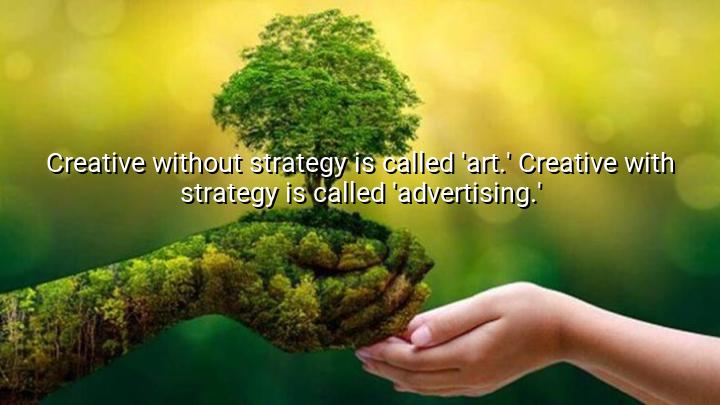




The quote "Creative without strategy is called 'art.' Creative with strategy is called 'advertising.'" by Jef I. Richards highlights the distinction between art and advertising through the lens of creativity. Richards, a renowned advertising professional, emphasizes that art can be an expression of pure creativity without the need for a clear goal or intention. In contrast, advertising takes that same creativity but pairs it with a strategy designed to achieve a specific outcome, such as promoting a product or influencing behavior.
In this sense, art is typically seen as an open-ended form of self-expression, where the creator is free from any predetermined objective or commercial consideration. It can be abstract, subjective, and emotional, with the focus on the process of creation itself. On the other hand, advertising applies creativity with a deliberate purpose, often aimed at influencing consumers or achieving a business goal. The introduction of strategy in advertising ensures that the creative work is aligned with a specific marketing plan, targeting a defined audience and measurable objectives.
Richards' distinction between the two also reflects the different ways creativity is used in the commercial world versus the world of fine arts. While art may be appreciated for its aesthetic or emotional value without needing to sell or persuade, advertising is designed to prompt action, such as purchasing a product, adopting an idea, or changing behavior. The creative process in advertising is therefore more structured and goal-oriented.
In essence, Richards’ quote clarifies that the core difference between art and advertising lies in the role strategy plays. While both fields require creativity, advertising channels that creativity towards a specific purpose, while art remains free from such constraints, allowing for greater artistic freedom.

NNNhan Nguyen
This quote hits home, especially in today's world where branding and storytelling often overlap with art. It raises a philosophical dilemma: can strategic creativity ever reach the emotional depth or cultural impact of traditional art? Or does the commercial agenda inevitably flatten it? I’d love to hear opinions from both advertisers and artists—do they see each other as allies, rivals, or simply different branches of the same creative tree?
SSan
I’m curious about how creatives feel when their work shifts from personal expression to corporate intent. Does turning creativity into advertising feel like selling out, or is it just another way to use one’s talents meaningfully? The quote makes me think about the value systems behind art and advertising. Can something be both artistic and strategic without losing its soul? Or is that balance just really hard to find?
HCLuong Thi Hanh Chi
Interesting perspective from Jef Richards. It kind of makes me wonder: is advertising just a sophisticated form of applied art? If a painting makes me feel something and a great ad does the same, aren’t they both tapping into creativity? Maybe the real difference lies in the motive—expression versus persuasion. But still, can advertising be considered art if it’s also innovative, thought-provoking, and emotionally resonant?
TNTap Nguyen
I find this quote incredibly thought-provoking. It raises a big question for me: at what point does creative work stop being art and start becoming manipulation? When creative expression serves a commercial purpose, is it still meaningful in the same way? Advertising uses the same tools as art—emotion, symbolism, aesthetics—so is the only difference the intent? Or is there still a boundary between inspiration and persuasion?
THThu thuy Han
This quote really blurs the line between pure creativity and purpose-driven messaging. It makes me wonder—does putting strategy behind creativity diminish its authenticity, or does it just give it direction? Is advertising a less 'noble' form of creativity, or is it simply creativity with a mission? I think there’s something powerful about aligning creativity with a goal, but I’m still torn on whether it compromises artistic freedom.