

Clay can be dirt in the wrong hands, but clay can be art in the right hands.
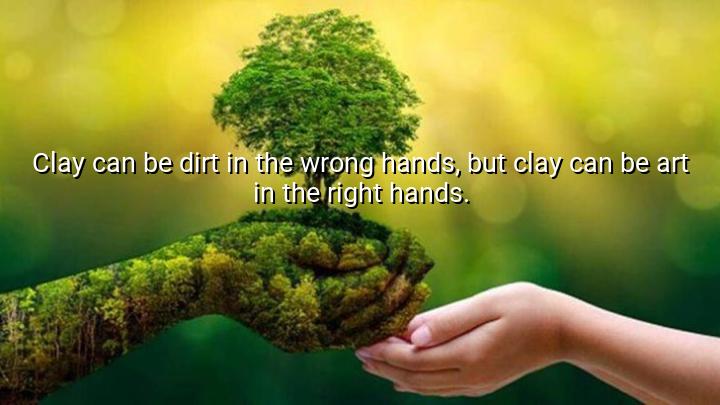




The quote "Clay can be dirt in the wrong hands, but clay can be art in the right hands" by Lupita Nyong'o emphasizes the transformative potential of creativity and the power of the artist to shape and mold something from its raw form. Nyong'o, an acclaimed actress and activist, is suggesting that the material itself, in this case, clay, is neutral—it can either be seen as dirt or art depending on the skill, vision, and intention of the person working with it. This highlights the importance of the artist's role in turning something basic into something profound.
Nyong'o’s statement underscores the idea that art is a reflection of the creator’s ability to transform the mundane into something meaningful. Just as clay can be shaped into intricate and beautiful works, a person with the right mindset, knowledge, and technique can take something simple and imbue it with value. In contrast, without that expertise or care, even the finest materials can become meaningless or unused, much like dirt.
The quote also speaks to the broader theme of potential—that with the right guidance, care, and creativity, any medium or material can be turned into something of beauty or significance. Whether it's clay, acting, or any other form of expression, what matters is the intention and skill behind it. It suggests that art is not just about what you have but how you use it and how you bring it to life through your personal vision.
Ultimately, Nyong'o’s quote highlights the role of the artist in shaping the world around them. It is a reminder that art is not just about the raw materials or resources at your disposal, but about the creativity and perspective you bring to them. Through this lens, clay, like any other material, can become a powerful form of self-expression and a testament to the artist’s ability to see and create beyond what is immediately visible.

HKHoa K
This quote feels incredibly motivating, especially for creatives who might doubt their own abilities. It suggests that transformation isn’t about the material—it’s about vision and care. But how do we cultivate those 'right hands'? Are they born, made, or both? I’d love to hear others’ thoughts on whether artistic ability is innate or something anyone can develop with enough practice and patience.
KAKim Anh
I love the simplicity of this quote—it really highlights how context and capability change everything. But I also wonder: can clay be art even in ‘the wrong hands,’ if the process is sincere or expressive? What if someone’s exploration of the material is messy, imperfect, but deeply meaningful? Does art require mastery, or is intention and emotion enough to elevate the mundane?
KV43. Kien Van
Reading this made me reflect on the role of opportunity and access. Some people may have the talent to turn clay into art but never get the chance to even touch clay. Is this quote, intentionally or not, overlooking systemic barriers? I’m curious about how we can ensure that more people have the tools, education, and encouragement to discover whether their hands are the 'right' ones.
DMDuyen My
I find this metaphor incredibly powerful—how something ordinary becomes extraordinary depending on who engages with it. But it also makes me wonder: do we sometimes label things as ‘worthless’ because we fail to see their potential? How much of art is in the material itself, and how much lies in the artist's ability to unlock meaning? I think this has big implications beyond art, even in how we view people or ideas.
NTHa Nguyen Thi
This quote makes me think about the importance of skill, vision, and intention in transforming raw potential into something meaningful. But it also raises a deeper question: what defines the 'right hands'? Is it formal training, natural talent, or simply passion and persistence? I wonder if we sometimes undervalue what unconventional or 'untrained' artists can do with the same material, simply because they don't fit into traditional molds.