

Art is the unceasing effort to compete with the beauty of flowers - and never succeeding.
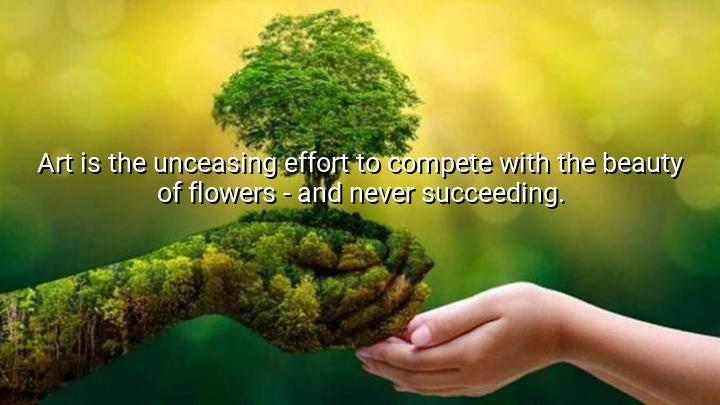




The quote "Art is the unceasing effort to compete with the beauty of flowers — and never succeeding" by Gian Carlo Menotti reflects the idea that art is an ongoing pursuit to capture or surpass the natural beauty found in the world, particularly in something as simple and perfect as a flower. Menotti, a renowned composer, suggests that while artists may strive to create something as beautiful and pure as a flower, the complexity and natural perfection of nature are beyond human imitation. The beauty of a flower is effortless and inherent, while art requires constant effort, and even the greatest works of art fall short of matching nature's simplicity and grace.
Menotti's quote speaks to the humility of the artist in recognizing the limits of human creativity. Despite the artist's best efforts, there is a fundamental difference between the beauty of nature and the creations of human hands. The flower's form, color, and life are created without intention or effort, whereas art requires painstaking work, thought, and intention. This comparison highlights the natural beauty that exists outside of human control, suggesting that no matter how hard an artist tries, they can never fully replicate the effortless perfection of nature.
The idea that art "never succeeds" in competing with the beauty of flowers underscores the paradox of creativity—that the pursuit of beauty is what drives artists, even though they know they can never reach its ultimate form. This concept resonates with many artists who are inspired by the world around them, particularly the simplicity and elegance of nature, but must ultimately accept that their creations, while beautiful in their own right, are always a reflection of their efforts and limitations.
Ultimately, Menotti’s quote is a meditation on the relationship between nature and art. It acknowledges the awe-inspiring beauty of the world and the artist's ongoing quest to capture or express it, while humbly recognizing that art can never fully replicate the effortless grace of nature's creations.

NLNguyen Thi Ngoc Linh
Is Menotti suggesting that nature holds an unmatched truth or purity that art can only ever mimic? If so, does that challenge the very idea of art as transcendence? I find this idea haunting and kind of motivating at the same time. It frames creativity as a kind of beautiful failure—a constant longing to capture what can’t be contained. Does that make art more powerful or more tragic?
NMUyen Nguyen Mai
Honestly, this quote almost feels discouraging at first—like art is always second-best. But maybe it’s more about embracing the humility in being human. Flowers just *are*, while artists have to reach, question, and create meaning. Does that mean art has its own unique kind of beauty—not because it’s perfect, but because it reflects the complexity of being alive and aware of imperfection?
NMTran Nhat Minh
This made me think about the relationship between nature and human expression. If art is in a constant race it can’t win, does that make it a futile act or a noble one? There’s something deeply emotional in the idea of trying to recreate or rival nature’s beauty, even knowing it’s impossible. But is that striving what makes art meaningful—its vulnerability in the face of perfection?
BTBao Tram
I find this quote beautifully poetic, but I wonder—why flowers? Is Menotti using them as a symbol of nature’s effortless perfection, or of something deeper, like fragility and temporality? Can art really never succeed in capturing that kind of beauty, or does it just express it in a different language? I’d love to hear how different artists interpret the role of natural beauty in their creative work.
HNHa Nguyen
This quote is so humbling. It makes me think that maybe the true purpose of art isn't to win, but to admire—to endlessly strive toward something we instinctively know we can't surpass. But if that’s the case, is the value of art found more in the effort than in the result? I’m curious whether this perspective encourages artistic humility or risks discouraging ambition altogether.