

Art is the stored honey of the human soul, gathered on wings of misery and travail.
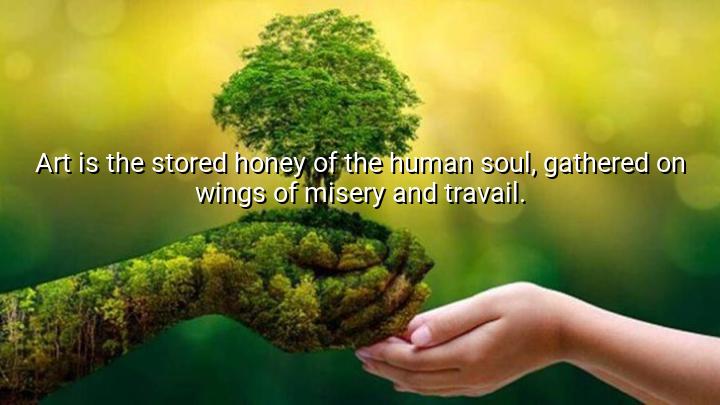




The quote "Art is the stored honey of the human soul, gathered on wings of misery and travail" by Theodore Dreiser emphasizes that art is deeply connected to the emotional and personal struggles of the artist. Dreiser suggests that art is the product of a soul that has endured hardship, suffering, and effort. The metaphor of honey highlights that while art is sweet, fulfilling, and nourishing, it is also the result of painful experiences—the misery and travail (struggles) that the artist must face to create something meaningful.
In this context, Dreiser implies that art is not created in ease or comfort but is forged through the difficulties and emotional turmoil of life. The human soul, through its suffering, processes its pain and transforms it into something beautiful, as art serves as a kind of emotional release or catharsis. The wings in the metaphor suggest that while misery and travail weigh heavily on the artist, these struggles also elevate the creative process, allowing the artist to transcend their pain and reach new heights of expression.
The origin of this quote reflects Dreiser’s own life experiences as a novelist and his deep engagement with the complexities of the human condition. Known for his works such as Sister Carrie and An American Tragedy, Dreiser often explored themes of human struggle, desire, and the harsh realities of life. His perspective on art as a form of expression born from personal suffering aligns with his belief in the transformative power of the human experience.
By comparing art to honey gathered on the wings of misery and travail, Dreiser emphasizes that the most profound and enduring creations are often the result of struggle. Art not only reflects the pain of life but also offers a way to transcend it, providing both solace and beauty from the depths of human experience.

TLvu thi thuy linh
The imagery here is stunning but also kind of heavy. Do all artists have to carry misery on their 'wings' to create something meaningful? That feels like a burdensome idea, especially for young artists who might think they need to suffer to be taken seriously. I appreciate the recognition of hardship in art-making, but I also hope we can make room for expressions born from lightness, wonder, and contentment. Can those be soul-filled too?
VATran Van A
This quote makes me think about how art is like emotional alchemy. Taking personal hardship and turning it into something universally appreciated feels almost magical. But at what cost? Does the process of gathering this 'honey' deplete the artist, or is it sustaining in some paradoxical way? I also wonder how this metaphor applies to collective trauma—can art gather and preserve the soul of an entire community or culture?
TLtien ly
I find this image beautiful—the idea of pain being transformed into something lasting and sweet. It reminds me of how artists often take years of struggle and condense them into a single piece that quietly carries their experience. But is the 'honey' only for others to taste? Or does the act of creating it nourish the artist too? That’s something I’d love to hear more people reflect on, especially those who create as a way to heal.
PPhat
Dreiser's metaphor is rich, but it raises a philosophical question: does the soul only produce something worth preserving when it suffers? I’m not sure I agree. Can't peace, spiritual fulfillment, or even boredom lead to profound art as well? This quote seems to align with the old idea of the 'tortured artist,' but in modern times, shouldn't we question whether suffering needs to be central to creative worth?
BNNgo Bao Ngoc
Reading this, I feel both inspired and sad. It acknowledges the beauty of art but also ties it so closely to pain. Is it possible to create this 'stored honey' without going through intense emotional labor? I think about artists who have struggled deeply—Van Gogh, Sylvia Plath—and wonder: is their art more valued because of the misery behind it? And if so, are we romanticizing suffering too much in creative culture?