

Art is not for the cultivated taste. It is to cultivate taste.
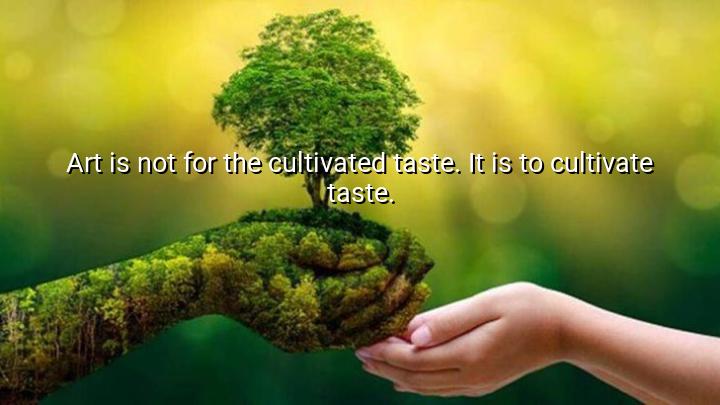




In this quote, Nikki Giovanni challenges the conventional understanding of art as something that is only for those with a cultivated taste, meaning those who are highly educated or refined in their appreciation of culture. Instead, she suggests that art itself is a tool designed to cultivate taste, meaning that its purpose is to develop and enhance a person’s ability to appreciate and understand beauty, creativity, and expression. Art should not be reserved for a select few, but be an accessible and transformative experience for everyone, helping to shape and broaden their perspectives.
Giovanni’s statement emphasizes the democratizing power of art. Rather than seeing it as something that only a specific group of people can truly appreciate, she positions art as a way to elevate and expand everyone’s tastes, making them more attuned to deeper meanings and emotions. In this sense, art is not an exclusive privilege but a cultural tool that helps individuals develop a more refined sense of what is valuable and moving.
The idea of cultivating taste suggests that art has a transformative impact on its audience. It not only provides aesthetic enjoyment but also contributes to personal growth and intellectual development. By engaging with art, individuals can learn to appreciate more complex ideas, diverse perspectives, and unfamiliar experiences, ultimately enriching their own cultural understanding.
Ultimately, Giovanni’s quote highlights the educational role of art in society. Rather than being an exclusive domain for the elite, art is a dynamic force that helps to shape and refine the sensibilities of all who engage with it. It fosters the development of personal and collective taste, encouraging individuals to see the world with a deeper, more thoughtful lens.

PCNguyen Tran Phuong Cuc
Reading this quote makes me wonder: can art that deliberately goes against conventional beauty or form still cultivate taste, or does it just provoke? Giovanni seems to argue that all art serves a purpose in shaping perception. But where do we draw the line between taste being expanded and simply being challenged? Is discomfort in the face of art a sign that it's doing its job well?
TThach
There's something liberating about thinking of art as a starting point rather than a reward for refined sensibilities. It makes me feel more confident to create and appreciate art, even if I don’t fully understand it. But why do you think so many people still feel intimidated by art galleries or museums? Is it cultural conditioning or just a lack of representation in those spaces?
SSsang sang
This quote made me pause. It suggests that art is a teacher, not just a product. But I wonder—how exactly does art cultivate taste? Is it through emotional connection, technical exposure, or challenging our perceptions? I’d be curious to hear others' thoughts on how their taste in art has evolved over time, and whether it’s because of exposure to new works or learning more about the context behind them.
KNPham Khanh Ngoc
Giovanni’s perspective is so refreshing. It feels like an invitation to stop worrying about whether we 'get' art and just engage with it. But it also raises a question for me—what happens when institutions, critics, or collectors only elevate art that already fits cultivated tastes? Does this limit the kind of work that can challenge or expand cultural norms? Where does true artistic growth come from then?
NHngoc haii
This quote makes me think about accessibility. If art is meant to cultivate taste, then everyone should have the opportunity to experience it—regardless of background or education. But in reality, access to art is often limited by socioeconomic status. How can we bridge this gap and ensure that art truly reaches and shapes a broader audience, as Giovanni seems to suggest it should?