

Art is made in hindsight.
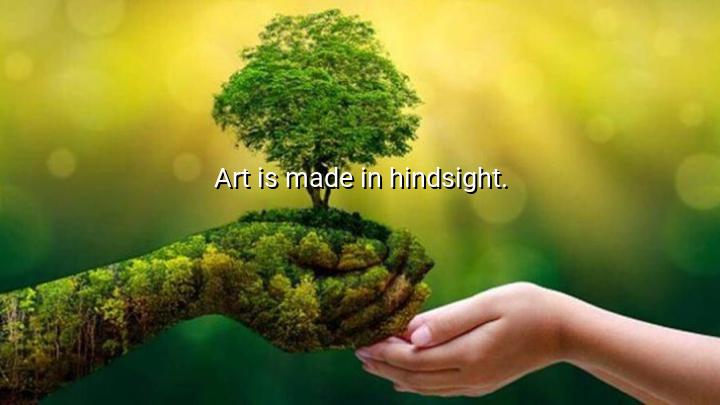




The quote " Art is made in hindsight" by Virgil Abloh speaks to the idea that art often gains its full meaning and significance only after it has been created and observed over time. Abloh, a renowned designer, artist, and the founder of Off-White, suggests that the true essence and impact of art are often clearer in retrospect. In the moment of creation, an artist may not fully understand the depth or relevance of their work, but as time passes, the art's meaning and significance can evolve and become more apparent.
By stating that art is made in hindsight, Abloh highlights the dynamic relationship between the artist, their work, and the audience. Art often grows in importance and resonance as it is experienced and interpreted by others. The process of creating art is a journey, and the work may not be fully understood or appreciated until it interacts with the world, triggering new ideas, emotions, and perspectives. This retrospective realization is what gives art its lasting power and relevance, even if it was not fully appreciated at the time of creation.
Abloh’s perspective also connects to the idea that art is fluid and subject to changing contexts. What may seem trivial or irrelevant when first created can gain new significance as it reflects broader cultural, social, or personal shifts. The work is then recontextualized in hindsight, gaining new layers of meaning as it is observed and understood in different times and circumstances. This aligns with Abloh’s approach to his own work, which often blends different cultural influences and constantly evolves based on contemporary interpretations.
In essence, Abloh’s quote reflects the belief that art is not only a product of the artist’s vision but also of the audience's evolving understanding. Art often reveals its true depth and significance after the fact, making hindsight a crucial element in the way we interpret and appreciate art. Through this lens, art becomes a living thing, constantly reshaped by time and experience.

1T19. tngan
Virgil Abloh’s quote is provocative. If art is only fully formed in hindsight, then how do we evaluate or critique contemporary works? Are we always jumping the gun when we label something as genius or mediocre too early? Maybe this explains why so many artists are only fully appreciated posthumously. It kind of reframes criticism—not as a final judgment, but as an evolving conversation that grows with time.
GDGold D.dragon
This quote really connects with how I view reinterpretation. Think about how society re-evaluates art through new lenses—like how older films are viewed differently in today’s social context. Is Abloh pointing out that no art is ever 'finished' in terms of meaning, because our perception of it keeps evolving? That’s a powerful idea, and it implies that artists and audiences are in a long-term dialogue over time.
CENha Chao em
As someone who journals and paints casually, I find this quote both comforting and challenging. It suggests I don’t need to fully understand what I’m doing creatively right now—that meaning will come later. But it also raises a concern: what if I never get that moment of hindsight? What if the work just remains ambiguous or incoherent? Is that still considered art, or does clarity matter?
QGQuynh Giao
If art is made in hindsight, then how do we explain works that are immediately impactful or revolutionary? Think of Picasso’s 'Guernica' or Nina Simone’s protest songs—those resonated instantly. Or were they only later understood in their full depth? Maybe Abloh is speaking more to the idea that significance accumulates over time, even if the initial emotional reaction is immediate. Either way, I’d love to hear how others interpret this.
NDHanh Nguyen Duc
I'm fascinated by this idea, especially in relation to fashion and design, where Abloh made his mark. Do you think he meant that cultural relevance or artistic importance only emerges with distance and reflection? If so, does that mean we might be misjudging current art because we haven’t had enough time to see it clearly? I wonder how this idea affects our expectations of 'instant' cultural impact today.