

Art is for healing ourselves, and everybody needs their own personal art to heal up their problems.
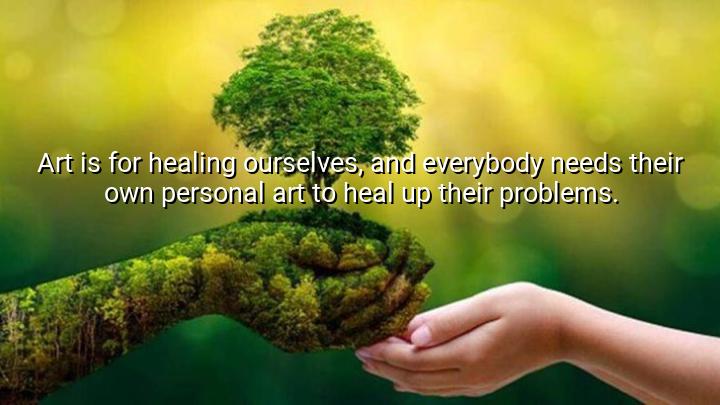




In this quote, Linda Ronstadt highlights the therapeutic potential of art, emphasizing that it is not just for expression or entertainment, but for healing. She suggests that art has a unique ability to help individuals address and overcome their personal struggles. Whether through creation or appreciation, art can serve as a tool for emotional and psychological restoration, offering comfort and understanding in times of need.
Ronstadt also stresses the importance of personal connection to art. Each person has their own way of engaging with art, whether through music, painting, dance, or any other medium. The idea that "everybody needs their own personal art" suggests that art is deeply subjective, and what heals one person may not have the same effect on another. Art becomes a personal form of therapy, tailored to individual needs and experiences, offering a way to navigate life's challenges.
The origin of this quote lies in Ronstadt's own experiences with music and art as healing forces. As a musician, she has witnessed firsthand the transformative power of music and performance, both for herself and for her audience. Her statement reflects a broader understanding of the therapeutic role art can play in human lives, underscoring its importance in emotional well-being and personal growth.
Through this quote, Ronstadt invites us to recognize the healing power of art and to seek out the forms that resonate most with us. Whether through creating or experiencing, art can offer a path to recovery and emotional fulfillment, helping individuals heal from their struggles in a way that is both personal and profound.

Ttuyen
There's a quiet wisdom in this quote that I really appreciate. It suggests that healing isn’t always verbal or logical—it can be sensory, intuitive, and creative. But it also raises a question: Can art sometimes bring up unresolved pain instead of healing it? How do we navigate the discomfort that art can stir in us while still trusting the process?
KTKhanh Thai
Ronstadt’s take on art feels beautifully inclusive. It suggests that healing is available to anyone willing to explore their creativity. But what if someone doesn’t know how to begin or feels blocked? I wonder what first steps she would recommend to someone who’s emotionally closed off or skeptical of art’s power. Is it about creating, or can it be about experiencing art too?
Lleanne
What strikes me about this quote is how it makes art feel essential, not optional. It's almost like therapy—only more personal and instinctive. Do you think schools and workplaces should do more to integrate creative outlets into daily life? If art can really help heal, shouldn't it be treated as a necessity rather than a luxury or hobby?
MTDo Hoang Minh Thien
This resonates deeply with me. I’ve often turned to music and painting during tough times, and it always brings a kind of clarity I can't get elsewhere. But I wonder, is there a risk of using art to avoid rather than confront problems? Can it sometimes become an emotional crutch instead of a tool for growth? I’d love to hear how others strike that balance.
DHDao Hai
I find this quote so comforting. It recognizes that healing isn't one-size-fits-all and that everyone might need a different form of creative expression to process pain. But it makes me wonder—how do we discover what our 'personal art' actually is? For someone who doesn't consider themselves creative, this could feel out of reach. Do you think healing through art requires talent, or just willingness and vulnerability?